How Much Does It Cost to Start a Hollow Block Manufacturing Plant?
Starting a hollow block manufacturing plant requires more than purchasing a block making machine. Land, factory infrastructure, raw material handling, curing facilities, molds, installation and working capital all contribute to the total investment.
For investors entering the concrete products industry, one of the first questions is straightforward: How much does it cost to start a hollow block manufacturing plant?
There is no single figure that applies to every project. A small plant producing one or two standard hollow block sizes will have different requirements from an automated concrete block production facility manufacturing hollow blocks, paving blocks and curbstones.
The most reliable way to estimate the investment is to break the project into individual cost categories, then match the equipment and facility requirements to the planned production capacity and local market.
This guide explains the main hollow block factory setup costs, the factors that influence the initial investment, and how to plan a production line that supports long-term operating efficiency.
1. Land and Site Preparation
Land is one of the first expenses to evaluate when planning a hollow block manufacturing plant. The cost depends on the country, region, industrial zone, land ownership arrangements and proximity to customers and raw material suppliers.
However, the purchase price or lease rate is only part of the calculation. The site must also accommodate the complete production process, from raw material storage to finished block dispatch.
A typical plant layout may require space for:
●Raw material storage and aggregate stockpiles
●Batching, mixing and block forming
●Curing and finished-product handling
●Finished block storage
●Equipment maintenance and spare parts
●Offices, utilities and supporting facilities
●Loading areas and truck access
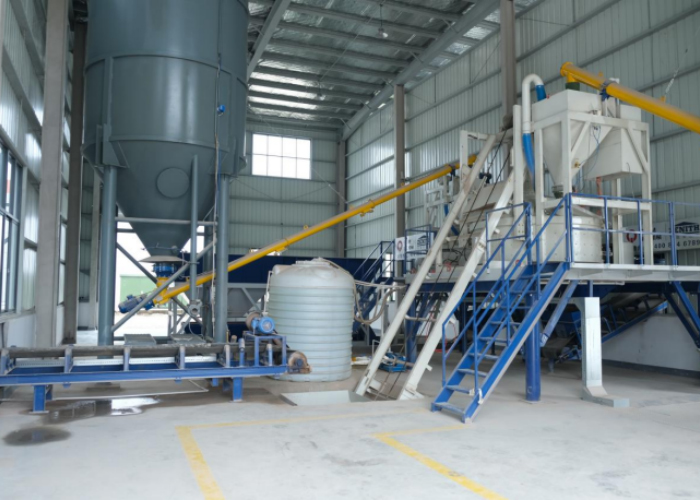
A site that appears inexpensive may create additional costs if it requires extensive ground preparation, long material transport routes or major utility upgrades.
Before committing to a property, assess road access, electricity supply, drainage, water availability and the distance to key customers. It is also worth allowing room for future expansion if market demand grows.
For investors working with a limited initial budget, a phased site plan can help avoid unnecessary expenditure on facilities that will not be needed during the first stage of production.
2. Production Equipment: A Major Part of the Initial Investment
The block making machine is a central component of a hollow block factory, but it is only one part of the production system.
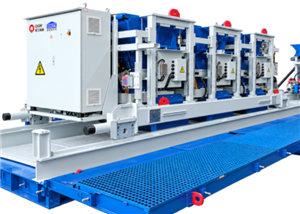
A complete concrete block production line may include batching and mixing equipment, a block forming machine, material feeding and conveying systems, pallets, block handling equipment, curing facilities and stacking or packaging equipment.
The final equipment cost depends on several factors:
●Required production capacity
●Level of automation
●Product dimensions and mold configuration
●Number of products manufactured
●Material handling requirements
●Pallet circulation and block transfer arrangements
●Installation and commissioning requirements
For a plant focused mainly on standard hollow blocks, a relatively straightforward configuration may be sufficient. If the business intends to supply several market segments, the equipment should also accommodate the required molds and product specifications.
That distinction matters. A machine with a low purchase price may not be the most economical choice if its production capacity, automation level or product range does not match the business plan.
When comparing the cost of an automatic hollow block making machine, evaluate its production capability, mold-changing arrangements, maintenance requirements and compatibility with the complete production line—not just the machine quotation.
3. Curing Facilities and Finished-Block Handling
Once concrete blocks have been formed, they need suitable curing conditions to develop the required strength and maintain product quality.
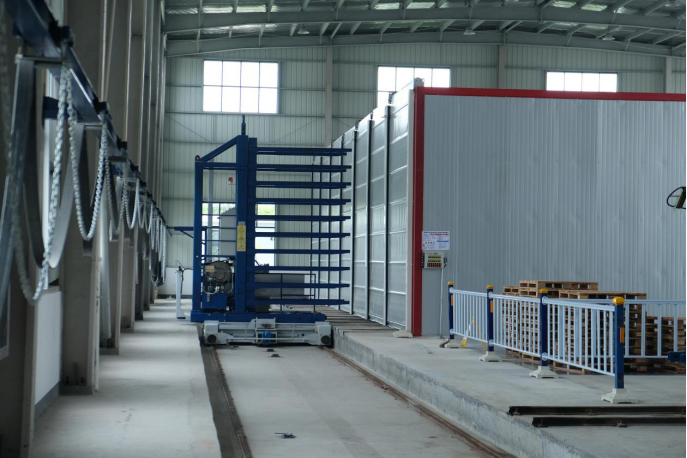
The curing arrangement depends on the production process, local climate, available space, product specifications and applicable quality requirements. Some plants use designated curing areas, while others incorporate more structured curing and material-handling systems into an automated layout.
The investment may include curing space, racks or other handling provisions, protective structures and equipment needed to move products through the curing process.
Finished-block handling also deserves attention. Blocks must be transferred, stored and dispatched without unnecessary damage or excessive manual handling.
A poorly planned curing or storage area can restrict production even when the block making machine itself has sufficient capacity. For example, if there is not enough space to accommodate freshly formed products or cured inventory, the forming line may need to slow down or stop.
When estimating the cost of a hollow block factory, consider curing and handling capacity alongside the output of the forming machine. Both must support the intended production schedule.
4. Mold Costs Depend on Your Product Range
Molds determine the shape and dimensions of the concrete products manufactured by the machine. Different hollow block sizes, solid blocks, paving blocks and curbstones may require different molds.
This means mold investment is closely linked to the products a plant intends to sell.
A new factory that initially focuses on one or two widely used hollow block specifications may be able to limit its starting mold inventory. As the business expands into additional product categories, more molds can be introduced according to customer demand.
Before purchasing molds, confirm the target product dimensions, required wall thicknesses, mold compatibility and the machine's available forming area.
For investors planning a multi-product concrete block manufacturing plant, it is useful to compare the cost of each additional mold with the expected demand for that product. This helps prioritize mold investment around realistic sales opportunities.
5. Factory Construction, Utilities and Installation
Beyond the main equipment, a block factory requires supporting infrastructure to operate safely and reliably.
Depending on the site and project scope, these expenses may include:
●Factory buildings and foundations
●Electrical distribution and control connections
●Water supply and drainage
●Aggregate storage and material handling facilities
●Equipment transportation and installation
●Commissioning and operator training
●Maintenance tools and initial spare parts
Some projects use existing industrial buildings, while others require new construction and site development. The difference can have a substantial effect on the initial investment.
Installation and commissioning should also be included in the budget. Equipment needs to be positioned, connected, tested and adjusted before commercial production can begin.
It is advisable to clarify the scope of supply with the equipment manufacturer. Confirm which auxiliary systems, transportation arrangements, installation services and training activities are included in the quotation, and which must be budgeted separately.
6. Working Capital and Early Operating Expenses
A factory needs sufficient working capital to cover the period between starting production and receiving reliable sales revenue.
Initial operating expenses may include:
●Cement, aggregates and other raw materials
●Wages and employee training
●Electricity and water
●Equipment maintenance and consumable parts
●Product testing and quality control
●Packaging, storage and transportation
●Sales, administration and other overheads
The amount required depends on local material prices, production schedules, payment terms and the time needed to establish a stable customer base.
For example, a business selling primarily to contractors may face a different cash-flow cycle from one supplying distributors or retail building-material outlets. Customer credit terms and inventory requirements can affect how much operating cash is needed.
A realistic investment plan should therefore include a working-capital reserve rather than allocating the entire budget to land and machinery.
What Determines the Total Cost of a Hollow Block Factory?
The overall investment is shaped by the interaction between plant scale, equipment configuration, site conditions and product strategy.
The following table provides a practical starting point for budgeting.
Cost category | Main factors to evaluate |
Land and site preparation | Location, land price or lease, ground conditions, access |
Factory and infrastructure | Buildings, foundations, utilities, drainage |
Production equipment | Machine model, capacity, automation and auxiliary systems |
Curing and handling | Curing method, available space, transfer and stacking equipment |
Molds | Product dimensions, number of product types, mold compatibility |
Installation and commissioning | Transport, assembly, electrical connections, testing and training |
Initial operating expenses | Materials, labor, utilities, maintenance and quality control |
Working capital | Inventory, customer payment terms and operating cash reserve |
To estimate the initial investment, calculate each category separately and then add a contingency allowance for project-specific costs.
A useful budgeting framework is:Total Initial Investment = Site and Infrastructure + Production Equipment + Molds + Curing and Handling + Installation and Commissioning + Initial Working Capital
The exact categories should be adjusted to avoid double-counting items already included in an equipment supplier's quotation.
For a more accurate estimate, investors should prepare a preliminary production plan specifying the target output, product sizes, automation level, available site and local construction costs.
How Can You Control Long-Term Production Costs?
Initial investment is only one part of the financial picture. Once the plant starts operating, labor, materials, energy consumption, maintenance and equipment utilization will influence the cost of every block produced.
Automation is one factor worth evaluating, especially for medium- and large-scale operations. Automated feeding, forming, transfer and stacking can reduce the need for repeated manual handling and help coordinate production stages.
However, higher automation is not automatically the right choice for every project. It should match the intended production volume, labor availability, product range and budget.
Material management is equally important. Consistent batching and mixing help maintain product quality, while appropriate mold selection and equipment maintenance can reduce avoidable interruptions.
Curing and storage should also be coordinated with the forming line. Increasing machine output alone will not improve overall plant performance if downstream handling becomes a bottleneck.
When evaluating a block making machine investment, compare the expected cost per saleable block, including material consumption, labor, utilities, maintenance and downtime. This provides a more useful basis for equipment selection than purchase price alone.
Is the QGM ZN1200-2 Suitable for a Hollow Block Factory?
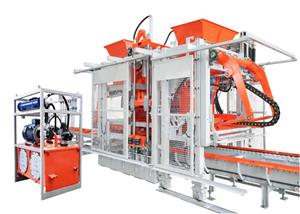
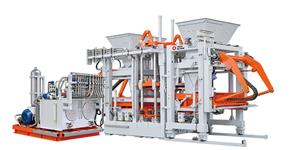
For investors planning an automated concrete block manufacturing plant, the QGM ZN1200-2 fully automatic block making machine is one option to consider when its production configuration matches the project's requirements.
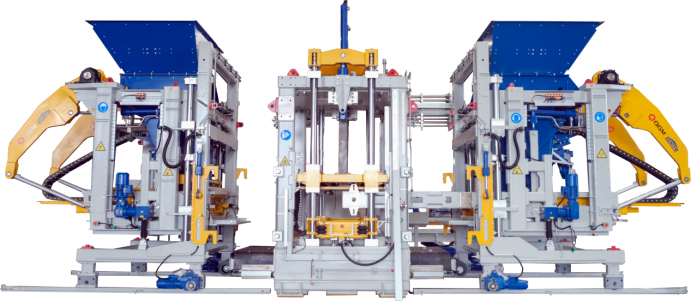
Developed on the Zenith technology platform, the ZN1200-2 is designed to manufacture a range of concrete products, including hollow blocks, paving blocks, curbstones and other specialized or landscaping products. Its product flexibility can be useful for businesses planning to serve more than one construction market.
The machine incorporates several technologies relevant to production planning:
1.Four-Axis Servo Vibration
The Zenith Ultra-Dynamic four-axis servo vibration system allows rapid and precise adjustment of vibration amplitude and frequency. This helps control the forming process and supports production requirements across different product types.
2.Automatic Quick Mold Change
The automatic quick mold change system coordinates mold transport, positioning and locking. It is designed to reduce manual intervention during mold replacement and support more flexible production scheduling.
3.Integrated Feeding and Modular Design
The suspended feeding system combines key feeding components in a modular arrangement. The main machine also uses a modular frame design to facilitate maintenance and replacement of wear parts.
4.Siemens S7-1500 Control System
The integrated control system uses a Siemens S7-1500 series PLC and a visual human-machine interface. This provides centralized machine control and a clear interface for operators.
5.Intelligent Equipment Cloud Service
The QGM Intelligent Equipment Cloud Service Platform supports online equipment monitoring, remote upgrades, fault prediction and diagnosis, equipment health assessment and operating reports, subject to the system configuration.
According to QGM's published product specifications, the ZN1200-2 has a pallet size of approximately 1,400 * 870\900 mm and a product-height range of 40–500 mm. For a 400* 200 *200 mm hollow block, the published reference capacity is 12 blocks per cycle and approximately 19,500–24,000 blocks per eight-hour shift.
These figures are reference specifications, not a guarantee of output under every factory condition. Actual production depends on the concrete mix, mold configuration, cycle time, operating schedule and the performance of the complete production line.
For investors, the important step is to match the machine's capabilities with the required product specifications and sales volume. A suitable configuration should also account for batching and mixing, pallet circulation, curing capacity, stacking, factory space and the planned level of automation.
Plan Your Hollow Block Factory Around the Market
There is no universal price for setting up a hollow block manufacturing plant. The total investment depends on where the factory is located, how much it needs to produce, which products it will manufacture and how much of the process will be automated.
Before committing to an equipment purchase, assess local demand, identify the most commercially relevant block sizes, estimate realistic production volumes and calculate the full cost of establishing and operating the plant.
The QGM ZN1200-2 may be a suitable option for projects that require automated production and flexibility across several concrete product types. The final machine and production-line configuration should be determined by the project's output targets, product range, available space and budget.
Planning a new hollow block factory? Contact QGM with your target block dimensions, expected output, raw material information and site conditions. These details will help the technical team assess a suitable machine configuration and production-line layout for your project.
FAQs
1. How much does it cost to start a hollow block manufacturing plant?
The total cost depends on land, factory construction, production equipment, molds, curing facilities, installation and working capital. A reliable estimate requires the target production capacity, product specifications, local construction costs and the intended level of automation.
2. What equipment is needed for a hollow block factory?
A typical setup includes a batching system, concrete mixer, block making machine, material feeding and conveying equipment, pallets, curing facilities and finished-block handling equipment. The exact configuration depends on the production scale and degree of automation.
3. Is an automatic hollow block making machine worth the investment?
An automatic machine can reduce manual handling and help coordinate production processes. Whether it is the right investment depends on the required output, labor costs, product range, available budget and expected equipment utilization.
4. Can the QGM ZN1200-2 produce products other than hollow blocks?
Yes. According to QGM's product information, the ZN1200-2 can produce hollow blocks, paving blocks, curbstones and other specialized concrete products, subject to suitable molds and machine configuration.
5. What information is needed to calculate the cost of a hollow block production line?
Start with the target output, block dimensions, planned product range, available site, local raw materials and desired automation level. These details help determine the machine configuration, auxiliary equipment, curing requirements and overall project budget.