How QGM Block Machines Address Production Challenges in Southeast Asia
Southeast Asia is becoming an increasingly important market for concrete products manufacturing. Rapid urbanization, infrastructure development, residential construction, and commercial projects in Indonesia, Vietnam, Thailand, Cambodia, the Philippines, Malaysia, and other Southeast Asian markets continue to drive demand for concrete blocks, paving blocks, curbstones, hollow blocks, and other precast concrete products.
For local block manufacturers, however, growing market demand also comes with increasing production pressure.
Many small and medium-sized block factories are facing challenges related to raw material variability, tropical climate conditions, labor shortages, rising operating costs, unstable power supply, equipment maintenance, regulatory compliance, intense market competition, logistics, and cash flow.
Among these challenges, three issues are particularly important:
●How can concrete block manufacturers maintain stable production in hot, humid, and rainy conditions?
●How can they reduce dependence on manual labor while controlling labor costs?
●And how can they remain competitive without relying solely on price?
For these manufacturers, upgrading from traditional or semi-automatic equipment to a modern automatic block making machine is becoming an increasingly practical way to improve production efficiency, product consistency, and long-term competitiveness.
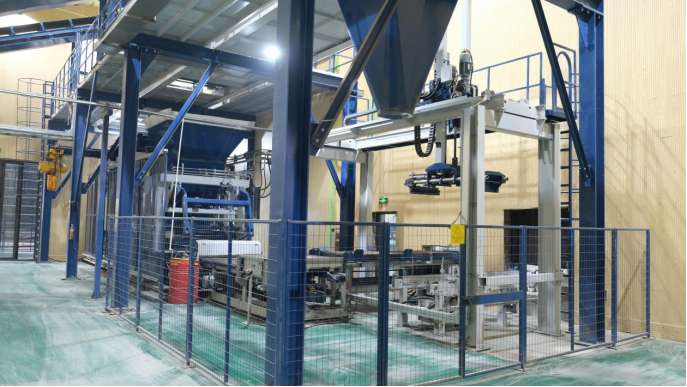
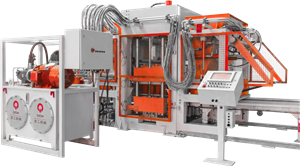
△QGM Automatic Block Making Machine Improve Production Efficiency and Consistency
With advanced block forming technology, intelligent control, and complete concrete block production line solutions, QGM helps manufacturers address these challenges through a more integrated approach to concrete products manufacturing.
1. How Can Southeast Asian Block Manufacturers Maintain Production in Hot, Humid, and Rainy Conditions?
Tropical weather is one of the most distinctive production challenges in Southeast Asia.High temperatures, high humidity, and prolonged rainy seasons can affect raw materials, concrete mixing, block forming, curing, material handling, and finished-product storage.
Rainy Seasons Can Cause Significant Raw Material Variations
Sand, crushed stone, and other aggregates are essential materials for concrete block production.During prolonged rainfall, however, aggregate moisture content can change considerably.
If manufacturers continue using fixed mix proportions without accounting for moisture variations, the concrete mixture may become too wet or too dry.
This can lead to:
●Inconsistent concrete workability
●Variations in block density
●Dimensional deviations
●Unstable compressive strength
●Higher rejection rates
Traditional factories often rely on operators to visually estimate aggregate moisture and manually adjust the mix. Such experience-based production is difficult to standardize and can become particularly problematic when experienced workers leave.
High Temperatures Create Different Production Risks
During hot and dry periods, freshly formed concrete products may lose moisture too quickly.Excessive moisture loss can contribute to shrinkage cracking, edge damage, and inconsistent strength development.
High temperatures can also accelerate cement hydration and shorten the workable time of freshly mixed concrete. If mixing, conveying, feeding, and block forming are not properly coordinated, material flow and forming stability may be affected.
How Does QGM Address Climate-Related Production Challenges?
QGM's approach is not simply to make a block making machine more powerful. Instead, the focus is on improving the controllability of the entire forming process.
QGM automatic block making machines integrate automated material feeding, controlled vibration, hydraulic forming, and intelligent PLC-based control to reduce unnecessary variations during production.
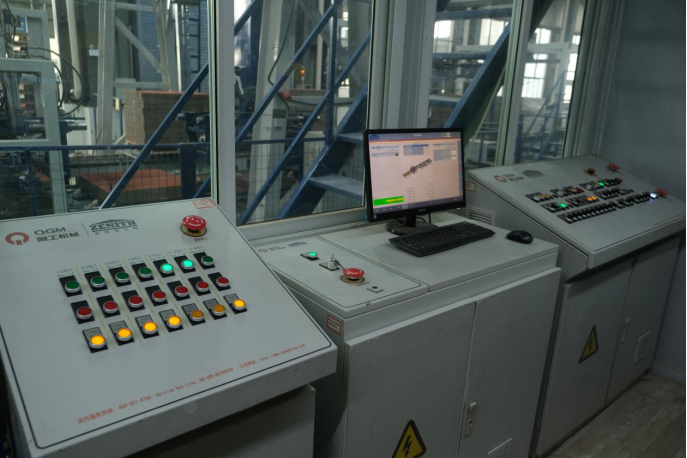
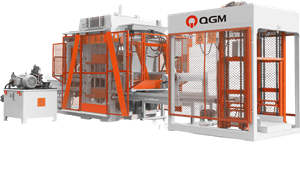
△QGM Automatic Block Making Machines for Consistent and Precise Production
Manufacturers can also adjust concrete mix designs and production parameters according to local aggregate moisture, seasonal conditions, product specifications, and curing requirements.
The result is a more controlled manufacturing process that reduces the dependence on operator experience and helps manufacturers maintain more consistent concrete block quality under changing tropical conditions.
For factories using natural or open-yard curing, proper drainage, weather protection, storage planning, and curing management remain important parts of the overall production strategy.
2. How Can Automatic Block Making Machines Help Reduce Labor Costs?
Labor availability is another major concern for Southeast Asian block manufacturers.Traditional concrete block production involves numerous labor-intensive activities, including material handling, machine operation, product transfer, quality inspection, stacking, and yard management.
At the same time, physically demanding jobs in hot factory environments are becoming less attractive to younger workers.
This creates a difficult combination:Labor costs are rising while experienced operators are becoming harder to retain.
Skilled Worker Turnover Can Affect Product Quality
Many traditional block factories rely heavily on experienced workers to determine concrete consistency and adjust production parameters.
Experienced operators may know how to respond to changes in aggregate moisture, concrete workability, vibration settings, or forming conditions.
When these workers leave, new employees may require significant training before they can operate the equipment effectively.
This can result in:
●Incorrect mix adjustments
●Improper machine settings
●Inconsistent block quality
●Increased rejected products
●Longer training periods
●Lower production efficiency
Automation Reduces Dependence on Manual Operations
QGM automatic block making machines are designed to automate key production processes and reduce repetitive manual work.
Automated material feeding, block forming, vibration, hydraulic movement, and production control allow operators to focus more on machine monitoring, quality control, maintenance, and production management rather than physically demanding repetitive tasks.
The purpose of automation is not simply to reduce headcount.More importantly, it helps manufacturers reduce dependence on individual operators and establish a more standardized production process.
For Southeast Asian block manufacturers facing labor shortages and rising labor costs, this can improve labor productivity while supporting more stable production.
3. How Can QGM Help Block Manufacturers Compete in a Price-Sensitive Market?
Price competition is particularly intense in markets where numerous small and medium-sized block factories operate alongside larger manufacturers.
Some low-cost producers use simple semi-automatic machines or reduce material costs to offer lower selling prices.
For manufacturers that invest in better raw materials, quality control, and equipment, competing only on price can quickly erode profit margins.
A more sustainable strategy is to improve production efficiency, product consistency, and product diversification.
From Price Competition to Production Efficiency
The value of a modern concrete block machine is not limited to its theoretical production capacity.A well-designed production line should help manufacturers control:
●Product dimensional accuracy
●Concrete compaction
●Production consistency
●Material utilization
●Labor productivity
●Equipment availability
●Overall production costs
QGM block making machines combine controlled vibration, hydraulic forming, intelligent automation, and flexible mold configurations to support stable concrete product manufacturing.
This gives manufacturers greater opportunities to produce different products for different market segments.
Depending on the machine configuration and mold solution, manufacturers can produce products such as:
●Concrete blocks
●Hollow blocks
●Paving blocks
●Curbstones
●Grass pavers
●Other precast concrete products
Product diversification allows manufacturers to serve residential construction, commercial projects, infrastructure development, landscaping, road construction, and other applications.
Instead of competing solely through the lowest selling price, manufacturers can build competitiveness around quality, efficiency, reliability, and product variety.
4. How Can Block Manufacturers Deal with Unstable Raw Material Quality?
Raw material variability is one of the fundamental causes of inconsistent concrete block production.
In some Southeast Asian markets, aggregates are sourced from multiple suppliers or production areas. Particle size distribution, moisture content, cleanliness, and material quality may therefore vary.
During the rainy season, moisture fluctuations can become even more significant.
If production parameters are adjusted only through operator experience, these variations can directly affect block quality and material consumption.
A More Standardized Production Process
QGM approaches the concrete block production line as an integrated system.
Raw material handling, batching, mixing, feeding, vibration, forming, curing, and product handling should operate as coordinated processes rather than isolated operations.
Manufacturers can establish standardized procedures for:Raw material inspection → Moisture monitoring → Batching → Concrete mixing → Material feeding → Block forming → Curing → Quality inspection
This approach helps reduce uncontrolled variations before the concrete mixture reaches the mold.
For factories using local aggregates, production trials and mix optimization are also important to determine suitable material combinations for the target concrete products.
Where industrial by-products such as fly ash or slag are locally available, manufacturers may also evaluate their potential use in concrete products, subject to applicable technical requirements and local regulations.
5. How Can Manufacturers Reduce the Impact of Unstable Electricity Supply?
Electricity reliability is an important consideration when operating an automated concrete block production line.
Voltage fluctuations, unexpected power interruptions, and peak-period electricity restrictions can interrupt production and affect delivery schedules.
An unexpected shutdown can also disrupt the coordination between concrete mixing, block forming, product handling, and curing.
For this reason, manufacturers should evaluate more than the nominal capacity of a block making machine when planning a factory.
Important considerations include:
●Available electrical capacity
●Machine electrical configuration
●Backup power strategy
●Production cycle requirements
●Supporting equipment
●Overall line coordination
QGM can evaluate project-specific production conditions and develop equipment configurations based on the customer's actual requirements.
The goal is to create a production system that is properly matched to the factory's available infrastructure and operating environment.
6. How Can Manufacturers Reduce Equipment Downtime and Maintenance Risks?
For a concrete products manufacturer, equipment availability directly affects production output and profitability.
A low-cost block machine may appear attractive at the purchasing stage, but frequent breakdowns, rapid component wear, difficult maintenance, and long spare-parts lead times can create significantly higher operating costs over the equipment's service life.
Equipment Cost Should Be Evaluated Over Its Entire Lifecycle
When selecting a block making machine manufacturer, buyers should consider more than the initial purchase price.
Key factors include:
●Equipment reliability
●Component quality
●Machine durability
●Ease of maintenance
●Spare parts supply
●Technical training
●Remote technical support
●Troubleshooting capability
●Lifecycle service
QGM places emphasis on long-term equipment performance and customer support.Through equipment training, maintenance guidance, technical support, and spare-parts services, QGM helps customers reduce operational risks and maintain production continuity throughout the equipment lifecycle.
Regular inspection of vibration systems, hydraulic components, electrical systems, molds, and other wear parts is also essential for maintaining equipment performance in demanding production environments.
7. How Can Block Factories Prepare for Stricter Construction and Environmental Requirements?
Construction standards and environmental regulations are evolving across Southeast Asia.Manufacturers supplying infrastructure, commercial construction, and government projects may need to meet increasingly stringent requirements for product strength, dimensional accuracy, water absorption, material composition, and production practices.
Environmental requirements related to aggregate extraction, industrial waste utilization, dust, wastewater, and material storage may also affect factory operations.
A standardized production process provides a stronger foundation for quality management.With controlled batching, consistent concrete mixing, stable vibration, accurate mold positioning, and standardized curing, manufacturers can achieve more predictable product performance.
QGM's automatic block making machines and concrete block production lines provide a structured manufacturing platform that can support standardized production and quality management.
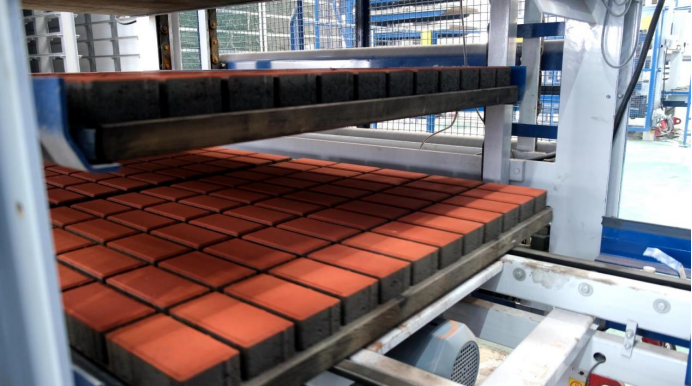
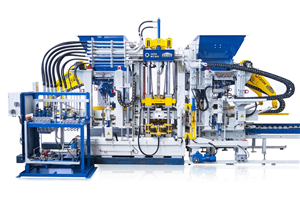
△QGM Automatic Block Making Machines for Standardized Production and Quality Control
However, specific product certifications and regulatory requirements should always be evaluated according to the applicable standards and regulations of the target market.
8. How Can Manufacturers Improve Logistics Efficiency for Heavy Concrete Products?
Concrete blocks and paving products are heavy construction materials, which means transportation can represent a significant part of the total product cost.
Poor road conditions during rainy seasons can further increase transportation time and the risk of product damage.This makes local production efficiency particularly important.
For manufacturers located close to construction projects, infrastructure developments, or expanding urban areas, a flexible automatic block making machine can support local production of multiple concrete products.
By producing the right products closer to target customers, manufacturers may reduce unnecessary transportation distances and improve delivery responsiveness.
For cross-border business, however, manufacturers should also consider country-specific product standards, certifications, customs requirements, and logistics costs before expanding into neighboring markets.
9. How Can QGM Help Manufacturers Improve Production Efficiency and Return on Investment?
For many small and medium-sized block manufacturers, purchasing a complete production line represents a significant capital investment.
At the same time, working capital may already be tied up in raw materials, finished products, curing yards, equipment, and accounts receivable.
Therefore, the right question is not simply:"How much does a block making machine cost?"
A more useful question is:"How efficiently can the production system convert raw materials, labor, energy, and equipment investment into consistent, saleable concrete products?"
This is where equipment efficiency and production management become directly connected to return on investment.
A properly configured QGM concrete block production line can help manufacturers improve automation, product consistency, production flexibility, labor productivity, and equipment utilization.
Actual ROI, however, depends on project-specific factors such as machine capacity, product mix, raw material prices, labor costs, electricity costs, selling prices, equipment utilization, and local market demand.
10. From Low-Cost Manufacturing to More Competitive Block Production
The production environment for Southeast Asian concrete products manufacturers is changing.
For small workshops, surviving through low prices alone is becoming increasingly difficult.For medium and large manufacturers, the focus is shifting toward production stability, automation, product quality, regulatory compliance, resource efficiency, and long-term operating costs.
This means that the future of concrete block manufacturing is not simply about producing more blocks.It is about producing more consistent products with less manual intervention and better control over the total cost of production.
QGM addresses these requirements through an integrated approach to concrete products manufacturing.
Its solutions combine:
●Automatic block forming technology
●Advanced vibration systems
●Precision hydraulic forming
●Intelligent PLC control
●Automated material handling
●Flexible mold solutions
●Production process management
●Technical training and lifecycle support
Together, these technologies help manufacturers build a more stable, efficient, and scalable concrete block production line.
QGM: Supporting the Next Generation of Concrete Block Manufacturing in Southeast Asia
Every Southeast Asian market has its own raw materials, climate conditions, labor structure, power infrastructure, construction standards, and product requirements.
Therefore, there is no universal block making machine configuration that is suitable for every factory.
A successful project should begin with a comprehensive evaluation of:Target products → Local raw materials → Required production capacity → Climate conditions → Labor availability → Power supply → Product quality requirements → Factory layout → Investment budget → Target market
Based on these factors, QGM can develop a customized automatic block making machine and concrete block production line solution for the customer's specific production requirements.
For small and medium-sized manufacturers, the priority may be reducing labor dependence, stabilizing product quality, and improving production efficiency.
For larger manufacturers, the focus may shift toward automation, higher production capacity, product diversification, process optimization, and long-term equipment performance.
In both cases, the objective remains the same:Build a more reliable concrete products manufacturing system that can adapt to changing market conditions and support sustainable business growth.
Conclusion: The Future of Southeast Asian Block Manufacturing Is About Efficiency, Not Just Price
Southeast Asia continues to offer significant opportunities for concrete products manufacturers.At the same time, increasing labor costs, tropical climate conditions, raw material fluctuations, power supply challenges, equipment maintenance requirements, regulatory changes, and intense price competition are forcing manufacturers to rethink how they produce and compete.
The value of a modern automatic block making machine should therefore not be measured only by its maximum theoretical output.
Its real value lies in its ability to deliver stable production, consistent product quality, efficient labor utilization, reliable equipment performance, and flexible product manufacturing over the long term.
For block manufacturers in Indonesia, Vietnam, Thailand, Cambodia, the Philippines, Malaysia, and other Southeast Asian markets, upgrading from traditional or semi-automatic equipment to a QGM automatic block making machine can be an important step toward standardized, automated, and scalable concrete products manufacturing.
By combining advanced forming technology, intelligent control, flexible production capabilities, and lifecycle technical support, QGM is committed to helping Southeast Asian manufacturers improve production efficiency, strengthen product quality, and build more sustainable competitive advantages.
Get the Right QGM Block Making Solution for Your Factory
Looking to upgrade your concrete block production line or establish a new block manufacturing plant in Southeast Asia?
QGM can help evaluate your raw materials, target products, required capacity, factory conditions, labor availability, and investment objectives to develop a suitable block making solution.
Contact QGM to discuss your concrete block manufacturing project and explore a production solution tailored to your market.
FAQ
1. What are the main production challenges faced by concrete block manufacturers in Southeast Asia?
Southeast Asian block manufacturers commonly face challenges related to high temperature and humidity, long rainy seasons, unstable aggregate moisture, labor shortages, rising labor costs, electricity supply, equipment maintenance, regulatory requirements, logistics, and intense market competition. These factors can directly affect production efficiency, product quality, and operating costs.
2. How can an automatic block making machine reduce labor costs?
An automatic block making machine can automate key processes such as material feeding, vibration, hydraulic forming, and production control. By reducing repetitive manual operations, automation can improve labor productivity and reduce dependence on large numbers of operators and highly experienced workers.
3. How does tropical weather affect concrete block production?
High humidity and rainfall can cause significant changes in aggregate moisture content, while high temperatures can accelerate moisture loss and cement hydration. These variations may affect concrete workability, block density, strength, dimensional accuracy, and curing. Proper raw material management, production parameter control, and curing practices are therefore important for maintaining consistent quality.
4. How can a block making machine help manufacturers compete in a price-sensitive market?
A modern block making machine can help improve production efficiency, product consistency, material utilization, and labor productivity. Flexible mold configurations can also allow manufacturers to produce different concrete products, helping them target multiple market segments instead of competing solely through low prices.
5. What should Southeast Asian manufacturers consider when choosing a concrete block making machine?
Manufacturers should evaluate more than machine capacity and purchase price. Important factors include local raw material characteristics, climate, target products, required production capacity, automation level, power supply, factory layout, mold requirements, equipment reliability, spare-parts availability, technical support, maintenance services, and long-term operating costs.