How to Optimize Raw Material Mix for Stronger Concrete Blocks: A Complete Guide for Modern Block Manufacturing
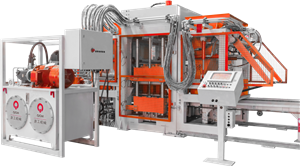
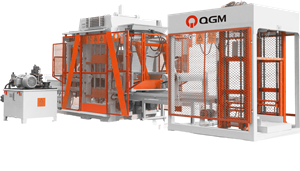
In modern construction materials manufacturing, producing high-strength concrete blocks is no longer dependent only on equipment capacity. While an advanced block machine provides the foundation for efficient production, the final performance of concrete products is largely determined by one critical factor—the quality and stability of the raw material mix.
For manufacturers engaged in concrete block manufacturing, achieving consistent compressive strength, accurate dimensions, and long-term durability requires a scientific approach to material proportioning. A well-designed mix can improve block density, reduce cement consumption, minimize production variation, and maximize the efficiency of the entire concrete block production line.
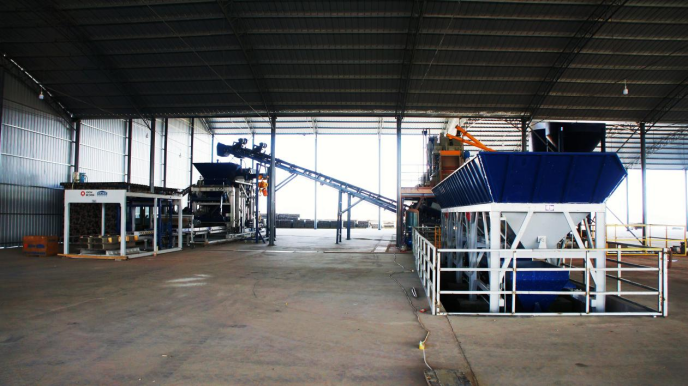
△ QGM Block Machine Customer Projects Worldwide
Many producers invest in upgrading machinery but overlook the influence of aggregate grading, moisture control, and mixing consistency. However, even the most advanced automatic block machine or smart block machine cannot fully compensate for an unstable raw material formula.
The relationship between materials and equipment can be summarized as:
Optimized Materials + Advanced Block Machine Technology = Stable High-Quality Concrete Products
Understanding the Role of Raw Materials in Concrete Block Manufacturing
Concrete blocks are produced through the interaction of several essential components:
| Material Component | Main Function | Influence on Block Performance |
| Cement | Provides bonding strength | Determines hardness and durability |
| Aggregates | Forms structural framework | Affects density and load capacity |
| Water | Activates cement hydration | Controls workability and strength |
| Additives | Improves specific properties | Enhances production flexibility |
A common misconception in the industry is that increasing cement content automatically improves block strength. In reality, excessive cement usage may increase production costs without creating proportional performance benefits.
The objective of professional block making machine operation is not simply to use more materials, but to achieve better interaction between each component.
For example:
●Proper aggregate distribution improves particle packing;
●Controlled moisture improves compaction efficiency;
●Stable mixing ensures uniform strength throughout every production batch.
This approach is particularly important for manufacturers producing different products through paving block machine/paver block machine,or concrete paving block machine systems.
Optimize Aggregate Gradation for Higher Density and Strength
Why Aggregate Distribution Matters
Aggregate is the main structural framework inside a concrete block. The particle size distribution directly affects how tightly materials can be packed together during forming.
Poorly graded aggregates create excessive internal voids, which may result in:
●Lower compressive strength;
●Higher water absorption;
●Increased cracking risk;
●Uneven product quality.
A scientifically designed grading curve allows smaller particles to fill the gaps between larger particles, creating a denser internal structure.
| Example of Aggregate Optimization Effect | ||
| Mix Condition | Internal Voids | Block Performance |
| Poor grading | High | Lower strength, unstable quality |
| Optimized grading | Reduced | Higher density and durability |
For manufacturers producing cement paving block machine products or large-scale infrastructure pavers, aggregate optimization is one of the most effective ways to improve performance while controlling material costs.
Control Water-Cement Ratio for Consistent Production
The Balance Between Workability and Strength
The water-cement ratio is another decisive factor affecting concrete block performance.
Too much water may appear beneficial because it improves material flow. However, excessive moisture creates more pores after curing, reducing block strength and durability.
An optimized water-cement ratio helps achieve:
●Better cement hydration;
●Higher density;
●Improved surface quality;
●Reduced shrinkage.
In practical production environments, even small moisture variations can create noticeable differences between batches.
Therefore, modern concrete block production line systems increasingly rely on automated monitoring and intelligent control rather than manual adjustment.
Ensure Uniform Mixing Before Forming
Why Mixing Quality Affects Final Block Strength
A perfect material formula still requires consistent mixing. Uneven distribution of cement, aggregates, and water can lead to weak areas inside the block.
A professional concrete block machine manufacturer should consider the entire production process, including:
●Raw material feeding;
●Precise batching;
●High-efficiency mixing;
●Material transfer;
●Block forming.
Uniform mixing creates a stable concrete matrix, allowing vibration systems and hydraulic pressure to achieve maximum compaction efficiency.
Matching Raw Material Design with Advanced Block Machine Technology
Raw material optimization does not work independently. It must be combined with appropriate forming technology.
QGM integrates advanced engineering solutions into its block production systems to help manufacturers transform optimized materials into high-performance concrete products.
Zenith Ultra Dynamic Vibration System: Improving Material Compaction
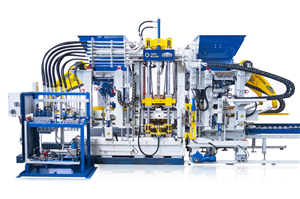
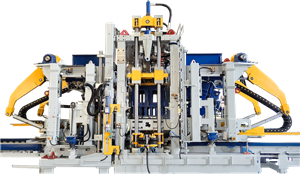
QGM block machines are equipped with Zenith ultra dynamic vibration system, which improves vibration efficiency during the forming process.
Compared with traditional vibration structures, this technology helps achieve:
●More uniform vibration distribution;
●Improved concrete compaction;
●Higher block density;
●Reduced cement dependency.
The result is stronger blocks with more consistent quality.
From Material Optimization to Intelligent Block Production
Smart Control Systems: Turning Material Advantages into Stable Production Results
Optimizing raw materials is only the first step toward producing high-quality concrete blocks. To fully convert a well-designed mix into reliable products, manufacturers need a production system capable of controlling every variable during forming, compaction, and handling.
Modern concrete block manufacturing has moved beyond traditional mechanical operation. Today’s advanced block machine manufacturer focuses on integrating automation, intelligent monitoring, and precise control technology to create a complete manufacturing ecosystem.
QGM combines mechanical engineering with digital technologies to develop advanced solutions including smart block machine, intelligent concrete block machine, and digital concrete manufacturing system platforms. These technologies help manufacturers maintain consistent product quality even under demanding production conditions.
SIEMENS S7-1500 PLC Intelligent Control: Improving Production Accuracy
Digital Control for Consistent Block Quality
In large-scale production environments, even minor fluctuations in vibration time, pressure, or cycle speed can influence final block performance.
To reduce human error and improve repeatability, QGM block machines integrate the SIEMENS S7-1500 PLC control system together with an intelligent touch-screen interface.
The system enables operators to:
●Monitor production parameters in real time;
●Adjust vibration and forming settings accurately;
●Record operational data;
●Optimize production efficiency;
●Perform remote technical diagnosis.
Intelligent Production Workflow
Raw Material
↓
Automatic Batching
↓
Mixing Control
↓
Block Forming
↓
Quality Monitoring
↓
Data Optimization
Through digital management, manufacturers can transform traditional production into a more efficient IoT block machine remote monitoring system, allowing engineers to analyze equipment status and optimize performance remotely.
For factories operating automatic block production line systems, intelligent control is no longer an optional feature—it has become a key factor in maintaining stable output and reducing operational risks.
Hydraulic System: Maintaining Stable Forming Pressure
Precision Engineering Behind Strong Concrete Products
After vibration technology, hydraulic control is another essential factor affecting block strength.
During the forming process, hydraulic systems determine:
●Mold movement accuracy;
●Compression stability;
●Demolding efficiency;
●Production cycle consistency.
QGM equipment adopts high-performance hydraulic components designed for continuous industrial operation. The system provides accurate pressure regulation and smooth mechanical movement, ensuring that every production cycle maintains the same forming conditions.
Stable hydraulic performance helps manufacturers achieve:
●More uniform block density;
●Reduced product variation;
●Longer machine service life;
●Higher production efficiency.
Quick Mold Change System: Increasing Production Flexibility
Reduce Downtime and Improve Product Variety
Modern construction markets require manufacturers to produce multiple types of concrete products, including:
●Interlocking pavers;
●Hollow blocks;
●Solid blocks;
●Kerbstones;
●Landscape products.
Traditional mold replacement processes can cause significant production interruptions.
QGM integrates a Quick Mold Change System to help operators replace molds faster and improve production flexibility.
| Production Efficiency Comparison | ||
| Production Method | Mold Change Time | Production Flexibility |
| Traditional System | Longer downtime | Limited product variety |
| Quick Mold Change System | Reduced downtime | Higher product adaptability |
With faster mold replacement, manufacturers can respond more efficiently to market demand while maximizing equipment utilization.
For companies operating a concrete block production line, this technology provides a practical advantage by improving scheduling efficiency and reducing unnecessary downtime.
Automatic Cubing System: Improving Block Handling Efficiency
Automated Stacking for Large-Scale Production
After forming and curing, finished blocks require efficient handling before transportation.
Manual stacking can create several challenges:
●Higher labor dependency;
●Increased product damage risk;
●Lower production efficiency;
●Inconsistent stacking quality.
QGM automatic cubing solutions help manufacturers achieve a smoother production flow through automated handling.
The system provides:
●Accurate block stacking;
●Reduced manual labor;
●Faster pallet preparation;
●Improved workplace safety.
Integrated with an automatic block machine and complete production line, the automatic cubing system creates a continuous workflow:
Block Forming
↓
Curing Process
↓
Automatic Transfer
↓
Automatic Cubing
↓
Finished Product Storage
This is particularly valuable for large-scale factories producing thousands of concrete products daily.
IoT Remote Monitoring: Building the Future of Digital Concrete Manufacturing
From Equipment Operation to Data Management
The future of concrete manufacturing is moving toward intelligent connectivity.
QGM develops advanced monitoring solutions that allow customers to access machine performance information through digital platforms.
IoT-based monitoring enables:
●Equipment condition tracking;
●Production data analysis;
●Remote troubleshooting;
●Preventive maintenance planning.
By combining IoT technology with automation, manufacturers can upgrade from traditional production models to a digital concrete manufacturing system.
This approach helps reduce unexpected downtime and improves long-term equipment reliability.
QGM Solutions for Global and Southeast Asian Markets
Supporting Construction Growth Worldwide
With rapid urban development, infrastructure expansion, and increasing demand for sustainable construction materials, markets such as Southeast Asia are experiencing strong growth in concrete product manufacturing.
Countries including:
●Indonesia;
●Vietnam;
●Thailand;
●Malaysia;
●Philippines;
are investing heavily in residential construction, roads, urban landscaping, and infrastructure projects.
These markets require equipment that can provide:
●High production efficiency;
●Stable product quality;
●Lower operating costs;
●Reliable after-sales support.
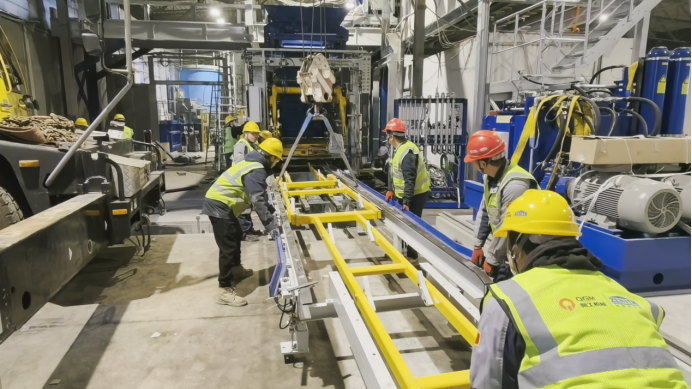
△Global QGM Block Making Equipment Installation Sites: Quality in Action
As an experienced concrete paving block machine manufacturer, QGM provides customized solutions suitable for different market conditions, raw materials, and production requirements.
From compact production systems to fully automated factories, QGM helps customers establish competitive concrete block production line solutions worldwide.
QGM Spare Parts and Global After-Sales Service
Long-Term Support Beyond Equipment Delivery
For industrial customers, purchasing a machine is only the beginning of a long-term partnership.
QGM provides comprehensive support including:
1.Original Spare Parts Supply
QGM supplies genuine components to ensure:
●Equipment compatibility;
●Stable operation;
●Reduced maintenance risks;
●Extended machine lifespan.
●Available support includes:
●Hydraulic components;
●Electrical parts;
●Wear-resistant components;
●Mold-related accessories;
●Maintenance parts.
2.Global Technical Service Network
QGM has developed international service capabilities to support customers through:
●Installation guidance;
●Operator training;
●Maintenance support;
●Remote technical assistance;
●Production optimization consultation.
This service approach allows customers to maximize equipment value throughout the entire machine lifecycle.
Conclusion: Optimizing Materials with Intelligent Manufacturing Creates Better Blocks
Producing high-quality concrete blocks requires more than selecting suitable raw materials. True production excellence comes from combining material science, precision engineering, and intelligent automation.
From optimized mix design to advanced vibration technology, hydraulic control, quick mold change, automatic cubing, and IoT monitoring, QGM provides complete solutions for modern concrete block manufacturing.
With technologies including Zenith ultra dynamic vibration system, SIEMENS S7-1500 PLC, intelligent control platforms, and automated production systems, QGM helps manufacturers achieve higher efficiency, stable quality, and sustainable growth.
As a professional block machine manufacturer and concrete products equipment supplier, QGM continues supporting customers across Southeast Asia and global markets with reliable equipment, original spare parts, and professional after-sales service.
If you are planning a new block making machine, upgrading an existing automatic block production line, or looking for a complete concrete products solution, please contact QGM. Our engineering team can provide customized recommendations based on your production capacity, product requirements, and market conditions.
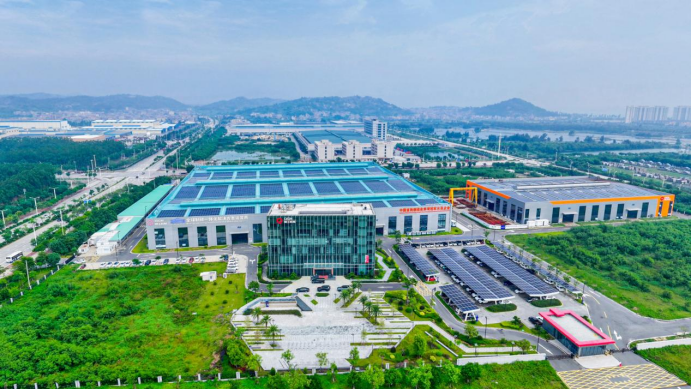
△QGM: Leading Global Manufacturer of Automatic Block Machines and Concrete Products Equipment
SEO FAQ: Raw Material Optimization and Block Machine Production
1. How does raw material mix affect concrete block strength?
Raw material proportion directly influences density, durability, and compressive strength. Proper aggregate grading, moisture control, and cement ratio help create stronger and more consistent concrete blocks.
2. Can an advanced block machine reduce cement consumption?
Yes. Advanced systems such as QGM block machines use efficient vibration and compaction technology to improve material packing density, allowing manufacturers to achieve required strength with optimized cement usage.
3. What advantages does the Zenith ultra dynamic vibration system provide?
The Zenith ultra dynamic vibration system improves vibration efficiency, enhances concrete compaction, and helps produce blocks with higher density, better strength, and more consistent quality.
4. Why is SIEMENS S7-1500 PLC important for modern block production?
The SIEMENS S7-1500 PLC provides accurate process control, real-time monitoring, and improved automation reliability, helping manufacturers maintain stable production performance.
5. Does QGM provide after-sales support and spare parts?
Yes. QGM provides original spare parts, technical support, remote assistance, training services, and global after-sales solutions to help customers maintain long-term equipment performance.