8 Common Block Making Machine Operating Mistakes and How to Avoid Them
A modern block making machine is designed to deliver repeatable production, but equipment performance is only part of the equation. The way a machine is operated, maintained, and integrated into the wider production process can have an equally significant impact on output quality and operating efficiency.
For manufacturers producing concrete blocks, paving blocks, hollow blocks, or other precast concrete products, seemingly minor operating mistakes can gradually lead to inconsistent product quality, higher material consumption, unplanned downtime, and premature component wear.
The challenge is therefore not simply knowing how to operate a concrete block making machine. It is understanding which operating practices can undermine production performance—and how to prevent those problems before they affect the production line.
Here are eight common mistakes worth avoiding.
1. Treating Raw Materials as a Constant
Concrete products depend heavily on the consistency of the raw materials used in the mix. Yet aggregate moisture, particle size distribution, cement characteristics, and the properties of supplementary materials can change over time.
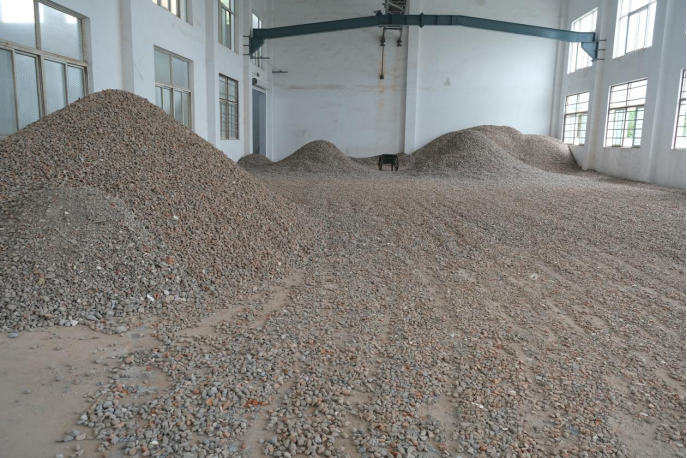
When operators continue using the same mix parameters despite changes in material conditions, the results can include variations in workability, filling behavior, compaction, product density, and finished block strength.
This is particularly important for manufacturers using locally sourced aggregates or recycled materials, where material properties may fluctuate more significantly.
A better approach
Instead of treating the mix as a fixed formula, production teams should:
* Monitor aggregate moisture and grading regularly.
* Maintain consistent raw material storage conditions.
* Adjust the mix when material characteristics change.
* Record production parameters and product results.
* Establish standardized quality checks before and during production.
A stable block production process begins with stable material management. Even the most advanced automatic block making machine cannot completely compensate for uncontrolled changes in the input materials.
2. Using the Same Vibration Settings for Every Product
Vibration is one of the most important stages in concrete block production. It helps distribute the concrete mix inside the mold and contributes to the density and structural integrity of the finished product.
However, more vibration does not automatically mean better compaction.
Excessive vibration may contribute to material segregation, while insufficient vibration can leave internal voids or produce blocks with uneven density. Different products, mix designs, and aggregate combinations may also require different vibration parameters.
What operators should consider
Rather than relying on a single vibration setting, production teams should evaluate:
* Vibration frequency
* Vibration duration
* Material characteristics
* Product geometry
* Target density
* Mold configuration
Modern concrete block making machines can use programmable control systems to manage production parameters more consistently. This allows operators to establish repeatable production recipes instead of making frequent manual adjustments during each production cycle.
The objective is not simply to increase vibration intensity. It is to achieve the right combination of vibration and compaction for the product being manufactured.
3. Continuing Production When Hydraulic Performance Becomes Unstable
Hydraulic systems play a critical role in many automatic block making machines. They are involved in functions such as mold movement, pressing, positioning, and coordinated machine operation.
Small changes in hydraulic performance may initially appear harmless. Pressure fluctuations, delayed movement, unusual noise, oil leakage, or inconsistent response, however, can be early indications of a developing problem.
Continuing production without investigating these symptoms can increase component wear and eventually result in unexpected downtime.
A better operating practice
Operators should pay attention to changes in:
* Hydraulic pressure
* Cylinder movement
* Response time
* Oil temperature
* Hydraulic oil condition
* Leakage around hydraulic components
Preventive inspection is generally more efficient than waiting for a hydraulic failure to stop the production line.
For high-output block making machine manufacturers and concrete product plants, maintaining hydraulic stability is especially important because even short interruptions can affect downstream handling, palletizing, curing, and overall production scheduling.
4. Making Too Many Manual Adjustments During Production
Experienced operators are valuable, but relying heavily on individual judgment can make production results difficult to standardize.
If operators frequently change machine parameters based on personal experience, two shifts may produce noticeably different results even when using the same raw materials and product specifications.
This becomes increasingly difficult to manage as production volumes increase or multiple operators work across different shifts.
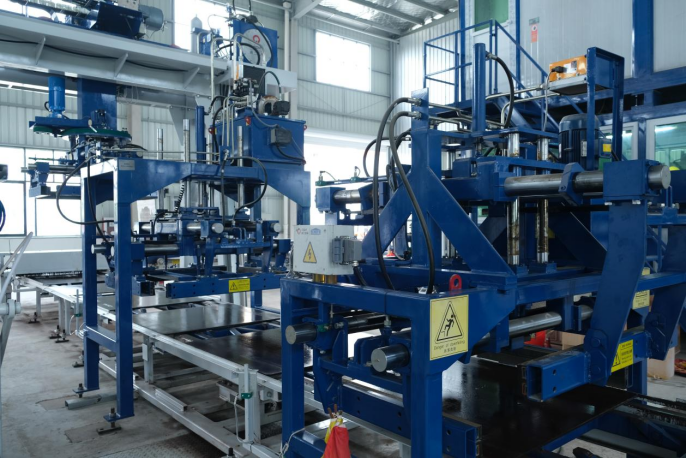
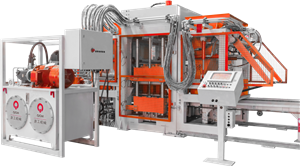
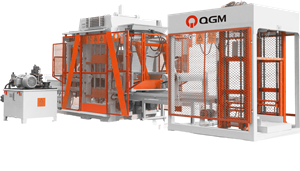
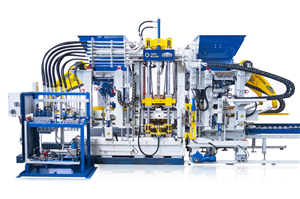
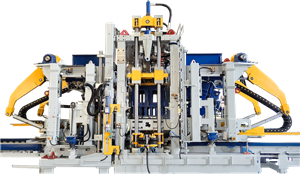
△QGM Block Making Machines in Global Concrete Block Production Projects
Moving toward controlled production
Automation can reduce this variability by allowing key production parameters to be stored, monitored, and adjusted through a centralized control system.
Depending on the configuration of the automatic block making machine, operators can manage functions such as:
* Production recipes
* Machine cycles
* Vibration parameters
* Material feeding
* Mold operation
* Production status
* Alarm information
The role of the operator therefore shifts from constantly correcting the machine to monitoring the process and responding when conditions move outside established parameters.
This approach supports more repeatable production while reducing unnecessary operator intervention.
5. Waiting Too Long to Replace a Worn Mold
The mold determines the shape and dimensions of the finished concrete product. Its condition therefore has a direct influence on product appearance, dimensional accuracy, and production consistency.
A worn mold may gradually create problems that are easy to overlook at first. Edges may become less defined, dimensions may drift, and product release may become less consistent.
Improper mold installation can create another problem. Even a well-manufactured mold cannot deliver accurate results if it is incorrectly positioned or poorly aligned.
What a production team should check
Before and during production, operators should inspect:
* Mold wear
* Mold alignment
* Mold locking condition
* Product dimensions
* Surface quality
* Ease of product release
Mold selection should also correspond to the product being manufactured and the operating conditions of the production line.
For plants producing multiple types of concrete blocks and paving blocks, an effective mold management program can help reduce changeover problems while maintaining consistent product quality.
6. Focusing on Machine Output While Neglecting Maintenance
A production line that runs continuously is not necessarily a production line that is operating efficiently.
When maintenance is postponed because production demand is high, minor issues can develop into larger mechanical or electrical problems. Over time, this can affect machine availability, product consistency, and operating costs.
Typical warning signs may include:
* Unusual vibration or noise
* Slower machine response
* Increasing cycle times
* Hydraulic leakage
* Loose or worn components
* Irregular product quality
* More frequent alarms
Maintenance should be part of production planning
A practical maintenance program should cover the main operating systems of the block making machine, including:
* Vibration components
* Hydraulic systems
* Electrical and control systems
* Material feeding equipment
* Molds and mold-related components
* Conveyors and handling equipment
* Lubrication points
* Safety devices
Preventive maintenance is part of production management.By identifying wear before it causes a failure, manufacturers can better control downtime and extend the service life of critical components.
7. Treating Curing as an Afterthought
Forming the block is only one stage of concrete product manufacturing.
After demolding, the products must develop the required strength and stability through an appropriate curing process. If curing conditions are inconsistent, the quality achieved during molding may not translate into the expected final product performance.
Factors such as temperature, humidity, curing duration, airflow, and product stacking conditions can all influence the curing process.
Why curing belongs in the production strategy
A well-designed concrete block production line should consider forming, handling, curing, and storage as interconnected stages rather than independent operations.
Manufacturers should establish curing procedures according to:
* Product type
* Concrete mix design
* Local environmental conditions
* Required strength
* Production volume
* Curing equipment and facility configuration
For plants operating in hot, cold, humid, or highly variable climates, controlling the curing environment becomes particularly important.
The goal is straightforward: ensure that blocks leaving the production line consistently meet the required performance standards—not simply that they look correct immediately after molding.
8. Managing Individual Machines Instead of the Entire Production Line
One of the most overlooked operational issues is focusing too heavily on individual pieces of equipment.
A concrete block manufacturing plant is not simply a collection of separate machines. Raw material batching affects mixing. Mixing affects feeding. Feeding affects filling. Filling and vibration affect compaction. Demolding affects handling. Handling affects curing and stacking.
A problem at one stage can therefore appear as a problem somewhere else.For example, inconsistent block density may not necessarily originate from the vibration system. It could be related to material moisture, feeding consistency, mold filling, or mix design.
Think in terms of the complete production process
A more effective approach is to monitor the relationship between:Raw Materials → Batching & Mixing → Feeding → Molding → Vibration → Demolding → Handling → Curing → Stacking
This systems-oriented approach makes it easier to identify the actual source of production problems instead of repeatedly adjusting the wrong parameter.
It also provides a stronger foundation for improving overall block production efficiency, product consistency, and equipment utilization.
From Machine Operation to Total Production Performance
Operating a block making machine effectively is about more than following a startup procedure or responding to alarms.
The strongest production results come from controlling variability throughout the entire manufacturing process.
That means maintaining consistent raw materials, selecting appropriate machine parameters, monitoring hydraulic and vibration performance, managing molds correctly, following preventive maintenance procedures, and ensuring that curing and material handling remain synchronized with molding operations.
As block manufacturing becomes increasingly automated, digital controls and intelligent production systems can further reduce dependence on manual intervention. The value of these technologies lies not simply in adding automation to the machine, but in making production more measurable, repeatable, and manageable.
This is where modern equipment solutions can make a difference. QGM focuses on combining automated control, production monitoring, precision molding, and integrated equipment solutions to help concrete product manufacturers manage production with greater consistency.
The ultimate objective is not to make operators work harder. It is to create a production environment in which the machine, materials, people, and downstream processes work together.
When production variables are controlled at their source, manufacturers can reduce avoidable defects, improve equipment availability, optimize material consumption, and build a more predictable manufacturing operation.
For companies investing in an automatic block making machine, that broader perspective is often more valuable than focusing on machine output alone.
A high-performing production line is not defined by one impressive component. It is defined by how reliably the entire system performs—day after day, production cycle after production cycle.
FAQ
1. What are the most common problems caused by improper block machine operation?
Common problems include inconsistent block density, dimensional variations, surface defects, unstable production cycles, excessive material consumption, premature component wear, and unplanned downtime. Many of these issues are related to raw material variation, incorrect machine settings, poor maintenance, or inconsistent operating procedures.
2. How does vibration affect concrete block quality?
Vibration helps distribute and compact the concrete mixture inside the mold. Insufficient vibration can result in inadequate compaction and internal voids, while excessive or inappropriate vibration may contribute to segregation. The correct vibration parameters should therefore be selected according to the product, mix design, and machine configuration.
3. How often should a block making machine be maintained?
Maintenance frequency depends on machine design, production hours, operating environment, and manufacturer recommendations. Daily inspections, routine lubrication, periodic component checks, and scheduled preventive maintenance should generally form part of a comprehensive block machine maintenance program.
4. Why is mold condition important in block production?
The mold directly influences product dimensions, shape, surface finish, and release performance. Worn, damaged, or incorrectly installed molds can lead to dimensional inconsistencies and product defects. Regular mold inspection and timely replacement are therefore important for maintaining consistent concrete block production.
5. How can manufacturers improve the efficiency of an automatic block making machine?
Efficiency can be improved by maintaining consistent raw materials, optimizing production parameters, minimizing unnecessary manual intervention, following preventive maintenance procedures, reducing changeover and downtime, and coordinating molding, handling, and curing operations as one integrated production process.