How Automatic Block Machines Reduce Labor Costs
An automatic block making machine can help concrete product manufacturers reduce labor costs by automating repetitive production tasks, improving workflow coordination, and increasing the number of qualified products produced with a more efficient workforce.
The biggest savings do not necessarily come from eliminating jobs. They come from reducing manual material handling, minimizing unnecessary movement between production stages, improving equipment utilization, and allowing operators to manage more standardized production processes.
For block manufacturers facing rising wages, difficulties recruiting skilled workers, or pressure to increase output, upgrading to an automated concrete block production line can be a practical way to improve operational efficiency.
However, automation alone does not guarantee lower production costs. The results depend on equipment configuration, product requirements, factory layout, labor organization, and how effectively the production line is operated.
So, where do the savings actually come from? And what should manufacturers consider before investing in an automatic block making machine?
1. Reduce Manual Operations and Optimize Workforce Allocation
In a conventional block manufacturing plant, workers may be involved in several repetitive tasks, including material handling, pallet transfer, machine operation, product transportation, and stacking.
When these activities rely heavily on manual labor, manufacturers need to coordinate more workers across different production stages. Work pace may also vary depending on operator experience, shift arrangements, and production conditions.
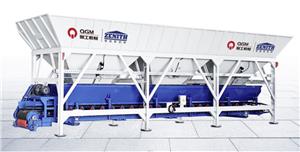
An automatic concrete block production line can integrate key operations such as batching, mixing, molding, conveying, and stacking into a more coordinated workflow.
Depending on the equipment configuration, automated systems can take over some repetitive tasks that would otherwise require manual handling. This helps manufacturers reduce labor-intensive operations and organize production teams more efficiently.
Rather than assigning workers primarily to repetitive handling tasks, factories can allocate more attention to:
•Monitoring equipment operating conditions
•Managing production parameters
•Inspecting product quality
•Coordinating material supply
•Carrying out routine maintenance
What buyers should consider: Automation requirements differ from one factory to another. Before selecting equipment, identify which production stages currently consume the most labor. Automating a high-labor operation may deliver more practical value than investing in additional automation features that do not address the factory's main bottleneck.
2. Increase Output Efficiency and Reduce Labor Cost per Block
Reducing the number of workers is only one part of labor cost management. For concrete product manufacturers, the more meaningful indicator is often labor cost per qualified product.
Consider two factories with similar labor expenses. If one factory produces more qualified concrete blocks within the same operating period, its labor cost per block may be lower.
A well-configured automatic block making machine helps improve production organization through controlled molding cycles and coordinated equipment operations. When material feeding, molding, and product transfer are properly matched, the production process can experience fewer unnecessary interruptions and less waiting time between stages.
This creates opportunities to:
•Improve production continuity
•Reduce non-productive manual activities
•Make better use of available working hours
•Increase output relative to the workforce
•Improve overall equipment utilization
It is important to distinguish between machine capacity and actual factory output. The final production result also depends on product dimensions, mold configuration, concrete mix design, curing arrangements, material supply, and downstream handling capacity.
For equipment buyers: Ask suppliers to evaluate the complete production process rather than focusing only on the molding machine's rated cycle time. A machine with a high theoretical output will not necessarily deliver the expected results if mixing, pallet circulation, curing, or stacking becomes a bottleneck.
3. Improve Product Consistency and Reduce Rework
Labor costs are also affected by product quality.
When production depends heavily on manual adjustments and inconsistent operating practices, differences in material distribution, molding conditions, and handling can contribute to variations in product appearance and quality.
An automatic concrete block making machine uses controlled feeding, vibration, and pressing processes to make production more repeatable.
Depending on the machine configuration, automated controls can help operators manage production parameters more consistently. This reduces reliance on frequent manual adjustments and supports more standardized manufacturing procedures.
More consistent production can help manufacturers reduce avoidable rework, rejected products, and additional handling. These improvements may also reduce the labor required for sorting, correcting, and moving defective products.
Several factors still determine final product quality:
•Raw material quality and mix proportions
•Aggregate moisture and material consistency
•Mold condition and dimensional accuracy
•Vibration and pressing parameters
•Curing conditions
•Equipment maintenance and operator practices
Automation works best when combined with appropriate mix design, standardized procedures, and regular equipment maintenance.
4. Why Are Automatic Block Making Machines Important for Southeast Asian Markets?
Across Southeast Asia, residential construction, commercial development, and infrastructure projects create demand for concrete blocks, hollow blocks, paving blocks, and other concrete products.
For manufacturers looking to expand production, workforce organization becomes an important operational consideration. Increasing output through additional manual labor may also increase recruitment, training, supervision, and wage expenses.
An automatic block making machine can help manufacturers organize production more efficiently by reducing repetitive tasks and coordinating multiple production stages.
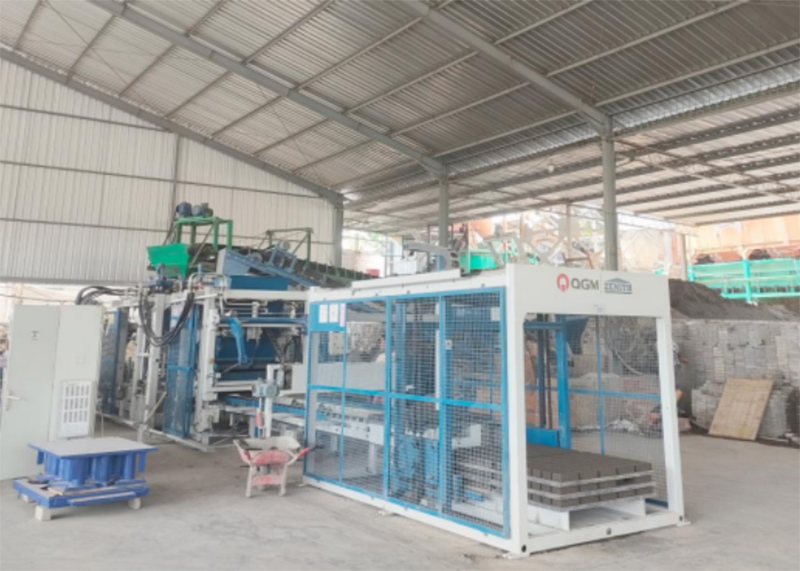
△QGM Automatic Concrete Block Production Line at a Customer Site in PT.Unggul Jaya Beton Abdulloh
For factories in markets such as Indonesia, Vietnam, Thailand, Malaysia, Cambodia, and the Philippines, equipment selection should reflect local production conditions rather than follow a one-size-fits-all approach.
Important considerations include:
•Local labor costs and workforce availability
•Required daily production volume
•Types and dimensions of concrete products
•Raw material characteristics and moisture variation
•Factory layout and available installation space
•Electricity supply and operating conditions
•Local technical support and spare parts availability
A practical investment consideration: Manufacturers should evaluate whether the proposed automation level matches their current workforce, production targets, and future expansion plans. A properly configured production line can be more valuable than an unnecessarily complex system that is difficult to operate or maintain locally.
5. Middle East Markets: Improve Production Coordination for Project Requirements
Construction and infrastructure development across the Middle East create opportunities for concrete product manufacturers serving residential, commercial, and public infrastructure projects.
In these markets, manufacturers may need to respond to changing product requirements, project delivery schedules, and quality expectations.
When material transportation, pallet handling, and product stacking depend heavily on manual operations, production continuity can become more difficult to manage as output requirements increase.
An automated concrete block production line can help coordinate different manufacturing stages, reduce selected manual handling tasks, and support more consistent production organization.
For manufacturers planning to expand their facilities or improve existing operations, the main consideration is how well the equipment configuration matches the required products and production workflow.
Before investing, buyers should also assess local installation conditions, operator training requirements, maintenance arrangements, and the availability of technical support. These factors can influence the long-term practicality of an automation project.
6. African Markets: Build a More Efficient Foundation for Production Growth
In several African markets, residential construction, road development, and urban infrastructure projects are creating opportunities for concrete block manufacturers.
For investors establishing new block plants or expanding existing facilities, the initial equipment price is only one part of the investment decision.
Long-term operating costs also depend on workforce requirements, equipment utilization, maintenance arrangements, material supply, and production efficiency.
An automatic concrete block production line can help reduce dependence on repetitive manual operations and provide a more structured approach to production management.
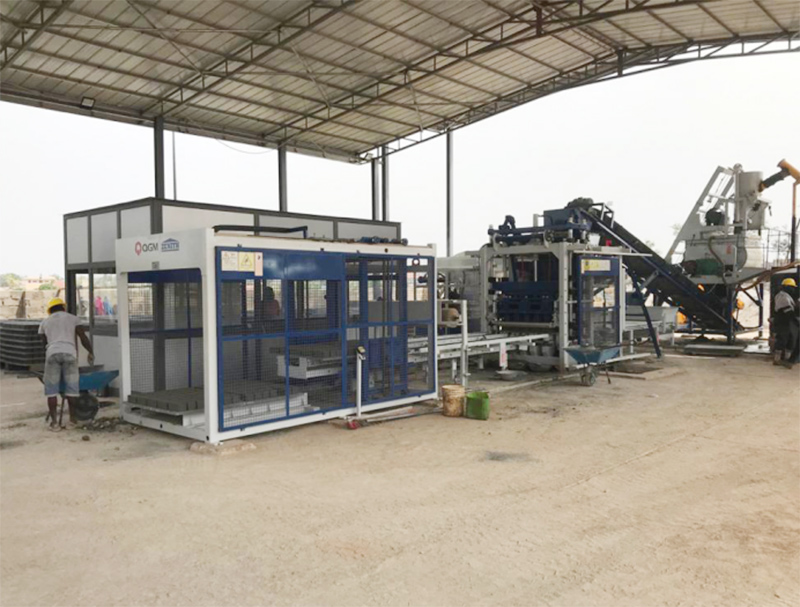
△QGM Automatic Concrete Block Making Machine Operating in Ghana
However, automation requirements vary considerably between countries and individual factories. Electricity availability, local technical skills, spare parts supply, installation conditions, and after-sales support should all be considered during equipment selection.
For a new factory, it may be more practical to plan an appropriate level of automation from the beginning. For an existing plant, identifying the most labor-intensive production stages can help determine where equipment upgrades will have the greatest operational value.
7. QGM ZN1000-2 Automatic Block Making Machine: A Flexible Option for Production Upgrades
For manufacturers looking to improve production efficiency and optimize workforce allocation, selecting the right molding machine is an important part of the investment decision.
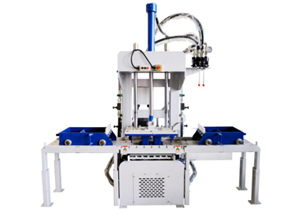
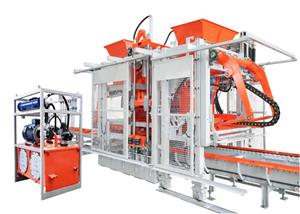
QGM's ZN1000-2 automatic block making machine is designed for the production of various concrete products, including hollow blocks, solid concrete blocks, paving blocks, curbstones, and other customized concrete products.
Developed using QGM's equipment manufacturing experience and German technical expertise, the ZN1000-2 combines intelligent control, vibration technology, and modular equipment design.
Several features are particularly relevant to manufacturers evaluating production efficiency and operating requirements.
Servo Vibration Options for Controlled Molding
The ZN1000-2 can be configured with optional servo vibration systems, including a dual-shaft servo vibration system or a Zenith ultra-dynamic four-shaft servo vibration system.
These configurations use servo-driven eccentric shafts to control vibration behavior. Depending on the selected configuration and production requirements, vibration parameters can be adjusted to support different material and product conditions.
For manufacturers producing different concrete products, suitable vibration configuration is an important consideration when evaluating molding performance and process flexibility.
Automatic Quick Mold Change
Changing product specifications often requires adjustments to the production setup.
The ZN1000-2 features an automatic quick mold change system designed to handle mold positioning, replacement, and locking.
This helps reduce manual intervention during mold changes and supports more flexible product switching. For plants manufacturing multiple product types, shorter and more organized changeover procedures can help improve production scheduling.
Modular Material Feeding System
Consistent material distribution is essential for the molding process.
The ZN1000-2 uses a modular feeding arrangement incorporating material feeding, face mix feeding, scraping, and related mechanisms. Optional anti-bridging feeding configurations are also available.
The feeding system is designed to support material distribution and accommodate different production requirements.
For buyers, the key point is to select a feeding configuration that matches the characteristics of the raw materials and the concrete products being manufactured.
Siemens S7-1500 PLC Control
The machine is equipped with a Siemens S7-1500 PLC control system and a Siemens operator touch panel.
The control system supports production parameter management, equipment status monitoring, and machine operation.
A structured control interface helps operators manage machine functions and production settings more systematically, which is particularly relevant for factories seeking to standardize daily operating procedures.
Modular Design and Expansion Options
The ZN1000-2 adopts a modular main machine design, with components arranged to support equipment maintenance and replacement.
Depending on production requirements, additional configurations can also be considered, including:
•Multi-colour system
•Foam concrete device
•Automatic board pulling device
•Core hole extraction device
•Transverse cleaning brush system
These options allow manufacturers to evaluate potential production extensions according to their product range and factory layout.
What makes the ZN1000-2 worth evaluating?
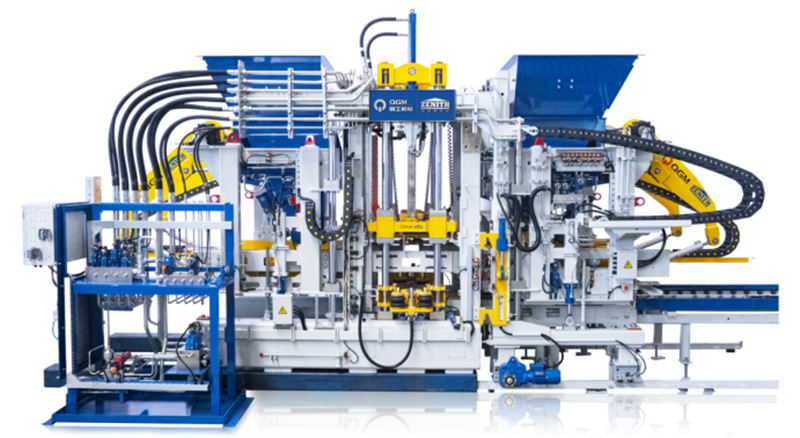
For buyers comparing automatic block making machines, the decision should not be based on the number of automated functions alone. Consider how the machine's vibration options, mold change system, material feeding arrangement, PLC control, and expansion possibilities fit the actual production process.
The most suitable configuration is the one that meets your product requirements, workforce plan, factory conditions, and investment budget.
8. How to Calculate Labor Cost Savings from an Automatic Block Making Machine
Before investing in an automatic block production line, manufacturers should establish a baseline using their existing production data.
Simply comparing the number of workers before and after an upgrade may not provide a complete picture. Output volume, product specifications, working hours, and product quality should also be considered.
A useful starting point is to calculate labor cost per qualified product.
Labor Cost per Unit = Total Labor Expenses During the Period ÷ Total Qualified Products Produced During the Same Period
For example, a factory can compare its labor cost per block before and after automation, provided that the comparison uses consistent product specifications and accounting periods.
The following indicators can help evaluate the actual impact:
Evaluation indicator | What to measure |
Workforce | Number of employees assigned to each shift |
Labor expenses | Wages and related labor costs |
Production output | Total products manufactured during the period |
Qualified output | Number of products meeting quality requirements |
Equipment utilization | Actual operating time compared with available time |
Rejection rate | Percentage of products rejected |
Maintenance expenses | Routine maintenance and repair costs |
For a more complete investment assessment, manufacturers should also include equipment purchase costs, installation, operator training, energy consumption, mold costs, spare parts, and ongoing maintenance.
A useful comparison: Evaluate the total operating cost per qualified product, not just the reduction in headcount. This provides a more realistic basis for comparing manual, semi-automatic, and fully automatic production arrangements.
9. How to Choose the Right Level of Automation for Your Block Plant
Not every concrete product manufacturer needs the same level of automation. The right solution depends on production scale, product variety, available labor, factory conditions, and investment priorities.
Before selecting an automatic concrete block making machine, consider the following questions:
What products will you manufacture?
Hollow blocks, solid blocks, paving blocks, curbstones, and decorative concrete products may require different molds, material feeding arrangements, and production configurations.
What is your target production volume?
Define your required output and operating schedule. The production line should be evaluated as a complete system, including mixing, molding, pallet circulation, curing, and stacking.
Which operations currently consume the most labor?
Identify whether the main labor demand comes from material handling, machine operation, pallet transfer, product transportation, or stacking. This helps determine where automation can make the greatest difference.
How much automation can your factory support?
Consider factory layout, power supply, available operators, maintenance capabilities, and the possibility of future expansion.
What support is available after installation?
Installation guidance, operator training, spare parts availability, and technical support are important considerations, particularly for overseas buyers.
A clear understanding of these requirements makes it easier to compare equipment configurations and avoid investing in functions that do not contribute to the factory's actual production needs.
Reduce Labor Dependence Through Better Production Planning
An automatic block making machine can help manufacturers manage labor costs, but the real value comes from how effectively the entire production process is organized.
Reducing repetitive manual work, improving production coordination, maintaining consistent molding conditions, and increasing qualified output can all contribute to lower labor costs per unit.
For concrete product manufacturers in Southeast Asia, the Middle East, Africa, and other growing markets, automation should be evaluated against local operating conditions and long-term production objectives.
QGM provides concrete block making equipment and production solutions for manufacturers with different product requirements and manufacturing needs. From the ZN1000-2 automatic block making machine to configurable production line solutions, equipment selection can be discussed according to product specifications, target output, factory layout, and automation requirements.
Planning to upgrade your block production facility or establish a new manufacturing plant?
Contact the QGM team to discuss your product range, expected production capacity, workforce requirements, and factory conditions. A well-matched equipment configuration is a more practical starting point for improving production efficiency and managing operating costs.
FAQs
1. How does an automatic block making machine reduce labor costs?
An automatic block making machine reduces labor requirements by automating selected production operations, such as material feeding, molding, conveying, and product handling. This can reduce repetitive manual work, improve workflow coordination, and increase the number of qualified products produced per worker.
2. Can an automatic concrete block production line operate without workers?
No. Automation reduces dependence on manual operations, but workers are still needed for equipment monitoring, production management, quality inspection, material supply, and maintenance. The actual workforce requirement depends on the production line configuration and factory operating arrangements.
3. What is the difference between manual, semi-automatic, and fully automatic block making machines?
Manual machines rely more heavily on operator involvement in production and handling. Semi-automatic systems automate selected processes while retaining some manual operations. Fully automatic production lines integrate more stages of manufacturing and material handling. The appropriate option depends on production volume, product requirements, labor availability, and investment budget.
4. What factors should I consider when buying an automatic block making machine?
Key considerations include product types and dimensions, target production output, machine configuration, vibration system, mold change requirements, material feeding, automation level, factory layout, maintenance needs, spare parts availability, and technical support.
5. Is the QGM ZN1000-2 suitable for producing different concrete products?
Yes. The ZN1000-2 is designed for manufacturing hollow blocks, solid concrete blocks, paving blocks, curbstones, and other customized concrete products. Product selection depends on the corresponding mold and machine configuration. Optional vibration systems and expansion modules can also be considered according to production requirements.