How to Measure Concrete Block Quality: Standards, Testing Methods and Manufacturing Solutions
Concrete Block Manufacturing Is Moving Toward Precision and Data-Driven Quality Control
With the continuous development of global infrastructure, green buildings, and sustainable construction, the requirements for concrete block manufacturing are becoming increasingly strict. Modern construction projects no longer focus only on production volume; they also demand higher standards in compressive strength, dimensional accuracy, durability, and product consistency.
For block manufacturers, quality has become a key factor affecting market competitiveness. Whether producing hollow blocks, solid blocks, paving blocks, permeable bricks, or customized concrete products, manufacturers must ensure that every unit meets engineering standards and performs reliably in real applications.
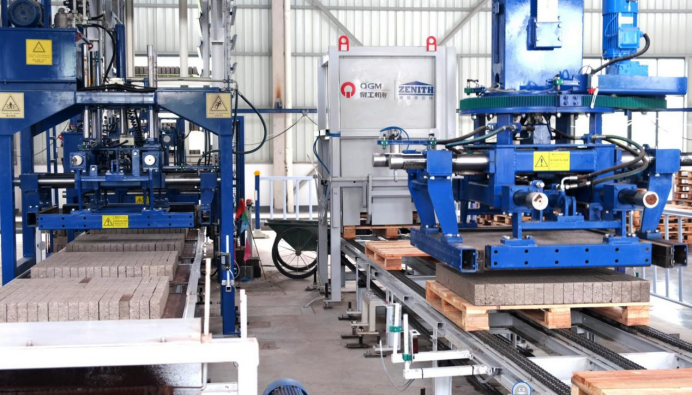
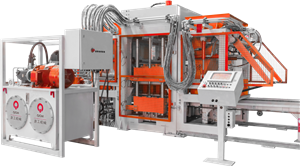
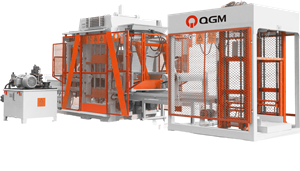
△QGM Automatic Block Machine Successfully Applied in Global Concrete Block Production Projects
This industry shift is driving the development of advanced block machine, automatic block machine, and intelligent production technologies. Quality is no longer controlled only through final inspection—it is built into every stage of the concrete block production line.
Customer Pain Points: Why Is Concrete Block Quality Difficult to Control?
Many block producers face similar challenges during daily operation:
1. Inconsistent Compressive Strength
Different batches may show variations in strength due to:
●Uneven material mixing;
●Insufficient compaction;
●Unstable vibration parameters;
●Inconsistent curing conditions.
Even when the raw materials remain unchanged, poor production control can result in weak blocks, reducing customer confidence and increasing rejection rates.
2. Dimensional Deviation and Poor Product Consistency
For construction projects, block dimensions directly influence installation efficiency and structural performance.
Common problems include:
●Uneven block height;
●Poor edge alignment;
●Irregular geometry;
●Increased mortar consumption.
These issues are usually related to mold accuracy, forming pressure stability, and equipment precision.
3. Excessive Water Absorption and Durability Problems
Block durability is strongly influenced by internal porosity.
High water absorption may cause:
●Reduced weather resistance;
●Lower freeze-thaw performance;
●Shortened service life.
Therefore, manufacturers need better control over material distribution and compaction efficiency.
4. Difficulty Maintaining Stable Quality in Large-Scale Production
As production capacity increases, manual adjustment becomes less reliable.
Large-scale factories require:
●Automated parameter control;
●Real-time production monitoring;
●Repeatable forming processes;
●Digital quality management.
This is why more manufacturers are upgrading toward smart block machine and intelligent concrete block machine solutions.
Technology Application: How QGM Automatic Block Machines Improve Concrete Block Quality
Accurate quality measurement depends on stable manufacturing conditions. Advanced equipment does not simply produce blocks—it controls the critical factors that determine block performance.
QGM integrates multiple technologies into its automatic block production line to help manufacturers achieve consistent and measurable product quality.
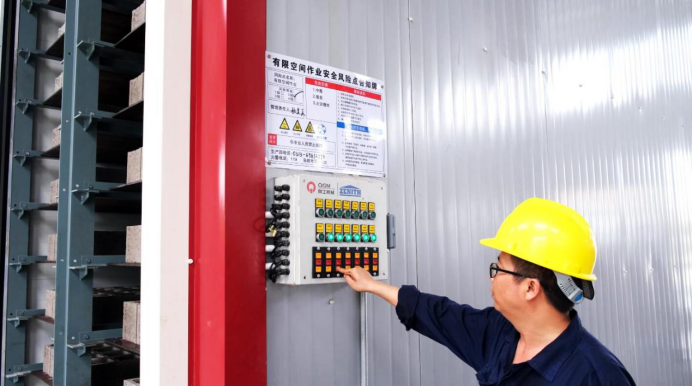
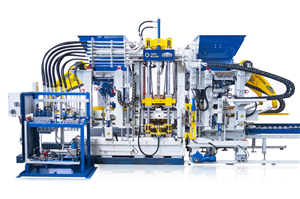
△QGM Automatic Block Machine Designed for Easy Operation and Efficient Production
1. Zenith Ultra Dynamic Vibration System for Uniform Compaction
The compaction process is one of the most important factors affecting block strength and density.
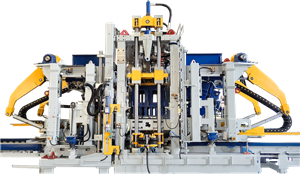
QGM automatic block machines can be equipped with the Zenith ultra dynamic vibration system, which provides high-response vibration control and optimized energy transmission.
The system helps achieve:
●More uniform material compaction;
●Improved block density;
●Reduced internal voids;
●Better compressive strength consistency.
Compared with traditional vibration methods, advanced vibration technology allows manufacturers to optimize forming efficiency while reducing unnecessary energy consumption.
2. Precision Hydraulic System for Stable Forming Pressure
Stable forming pressure is essential for producing high-quality concrete products.
QGM block machines use advanced hydraulic control technology to maintain accurate pressure during the forming process.
Benefits include:
●Consistent pressing force;
●Improved product density;
●Reduced deformation risk;
●Stable production cycles.
A reliable hydraulic system ensures that each block receives consistent forming conditions, which is especially important for high-speed concrete block production line operations.
3. SIEMENS PLC Intelligent Control System for Production Consistency
Modern block manufacturing requires more than mechanical reliability—it requires intelligent management.
QGM integrates SIEMENS PLC control systems with advanced human-machine interfaces to monitor and optimize production parameters.
The intelligent control system enables:
●Real-time equipment status monitoring;
●Accurate parameter adjustment;
●Automated production management;
●Reduced operator error.
Combined with IoT technology, QGM provides IoT block machine remote monitoring solutions, allowing customers to analyze equipment performance and improve production efficiency through digital management.
4. High-Precision Mold Technology for Accurate Block Dimensions
The mold directly determines the final shape and surface quality of concrete products.
QGM focuses on precision mold compatibility and manufacturing accuracy to support production of:
●Hollow blocks;
●Solid blocks;
●Paving blocks;
●Permeable bricks;
●Curbstones;
●Landscape concrete products.
High-quality molds help achieve:
●Stable product dimensions;
●Smooth surface appearance;
●Reduced production waste;
●Longer service life.
Quality Measurement System: From Testing Results to Production Optimization
Professional manufacturers do not only test block quality—they continuously improve it through data feedback.
A complete quality evaluation system usually includes:
| Quality Indicator | Testing Method | Production Impact |
| Compressive Strength | Compression Testing Machine | Determines structural performance |
| Density | Mass / Volume Calculation | Reflects compaction quality |
| Dimensional Accuracy | Caliper Measurement | Ensures construction compatibility |
| Water Absorption | Immersion Test | Indicates durability |
| Surface Quality | Visual Inspection | Evaluates forming consistency |
When testing results show deviations:
●Strength variation → optimize vibration and material ratio;
●Dimension errors → check mold condition and forming accuracy;
●Density changes → adjust compaction parameters;
●Surface defects → inspect feeding and pressing processes.
This closed-loop approach helps transform quality control from passive inspection into active production optimization.
Service: QGM Supports Stable Concrete Block Manufacturing Worldwide
As an experienced concrete block machine manufacturer, QGM provides more than equipment supply. The company delivers integrated solutions covering:
●Production line planning;
●Equipment selection;
●Installation and commissioning;
●Operator training;
●Technical support;
●Digital production management.
With decades of experience in the block machine industry, QGM helps customers build efficient and reliable concrete block production line systems for different market requirements.
Through advanced concrete products equipment, intelligent control technology, and professional service support, QGM enables manufacturers to achieve stable quality, higher efficiency, and long-term production value.

△Block Production Applications
FAQ: Concrete Block Quality Measurement and Production Control
1. How do you measure the quality of concrete blocks?
Concrete block quality is mainly evaluated through compressive strength testing, dimensional accuracy inspection, density measurement, water absorption testing, and surface quality evaluation.
2. What factors affect concrete block strength?
Concrete block strength depends on raw material ratio, compaction efficiency, vibration performance, forming pressure, curing conditions, and overall production consistency.
3. How can an automatic block machine improve block quality?
An automatic block machine improves quality through precise vibration control, stable hydraulic forming, intelligent PLC management, and accurate mold systems, ensuring consistent production results.
4. Why is vibration technology important in concrete block manufacturing?
Advanced vibration technology improves material distribution and compaction, reducing internal voids and helping manufacturers produce stronger and more durable concrete products.
5. How does QGM help customers achieve stable concrete block production?
QGM provides complete block manufacturing solutions, including advanced block machines, intelligent production systems, technical support, and digital management services to help customers maintain stable and efficient production.