Remote Monitoring & Smart Maintenance for Equipment Service
As industrial digitalization continues to advance, competition among manufacturers is no longer determined solely by the performance of the equipment itself.
For manufacturers of construction machinery, building materials equipment, and industrial machinery, delivering a machine to a customer is not the end of the service process. Once the equipment enters production, manufacturers must be able to continuously monitor its operating condition, respond quickly to equipment issues, minimize unplanned downtime, and improve equipment utilization. These capabilities are increasingly becoming important indicators of a manufacturer's overall competitiveness.
This is particularly important for industrial equipment manufacturers with sales and service networks spanning multiple countries and regions. Traditional service models based on telephone-based troubleshooting, manual communication, and on-site engineer visits are becoming increasingly difficult to reconcile with customers' expectations for rapid response and efficient equipment maintenance.
Take concrete block production equipment as an example. In the past, when a concrete block making machine encountered a problem, the customer would typically contact the service team by phone. Engineers would then attempt to identify the problem based on the customer's description and determine whether an on-site service visit was required.
Today, technologies such as the Industrial Internet, connected equipment, remote monitoring, and data analytics are enabling equipment manufacturers to move from a reactive service model toward a more proactive approach based on equipment visibility, remote diagnostics, and preventive maintenance.
This transformation is not only changing traditional after-sales service models. It is also helping manufacturers evolve from conventional equipment manufacturers into service-oriented manufacturing companies.
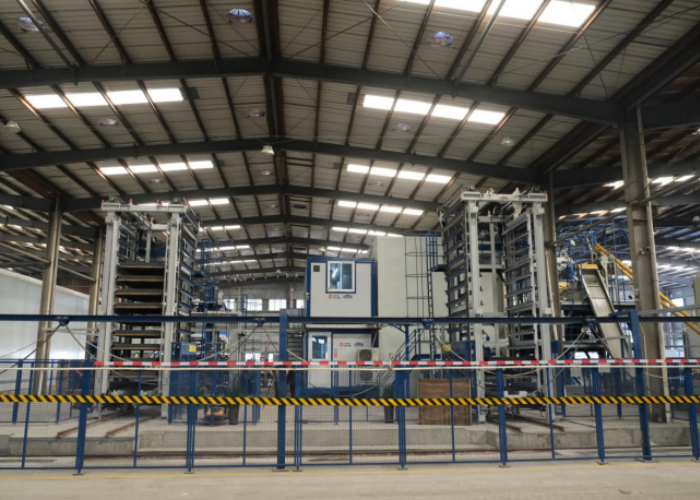
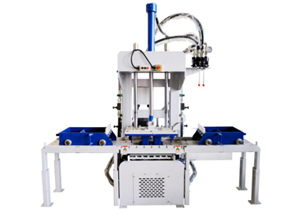
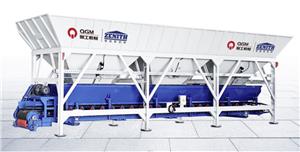
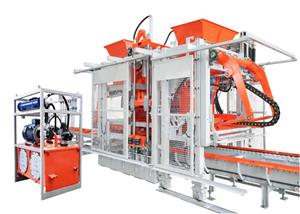
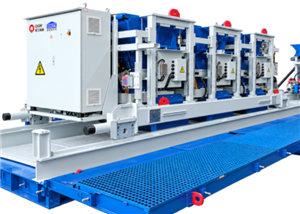
△QGM Automatic Block Making Machines for Concrete Block Production Worldwide
1. What Challenges Does Global Equipment Distribution Create for Industrial Equipment Services?
The broader a manufacturer's global equipment footprint, the more complex equipment service and maintenance can become.
When machines are operating across different countries and regions, traditional service models can be heavily affected by geographical distance, language barriers, information delays, and engineer scheduling.
1.1 Equipment Is Widely Distributed, Making Real-Time Visibility Difficult
Once industrial equipment has been delivered to a customer, manufacturers generally cannot monitor it as easily as equipment operating inside their own factories.
Is the machine operating normally?
Is production efficiency stable?
Have any critical parameters changed?
Have abnormal conditions occurred recently?
What is the actual operating environment of the equipment?
If manufacturers can obtain this information only when customers actively report it, it becomes difficult to build a continuous and accurate picture of equipment performance.
For block making machine manufacturers with equipment operating in overseas markets, relying solely on local sales representatives or service engineers to track individual machines is clearly not an efficient way to manage equipment information at scale.
Traditional information-sharing methods can also introduce delays and inaccuracies. For example, customers may not be able to describe a technical fault accurately, while important details may be lost when the information is passed from sales personnel to service engineers.
Therefore, one of the first challenges in industrial equipment digitalization is:How can manufacturers obtain accurate equipment operating data directly and efficiently?
1.2 Fragmented Equipment Data Creates Information Silos
Equipment service challenges do not exist only between manufacturers and customers. They can also exist within the manufacturer itself.
From production and sales to installation, commissioning, and after-sales service, each machine can generate a substantial amount of information, including:
* Equipment model and configuration
* Factory and delivery information
* Production records
* Installation and commissioning records
* Operating data
* Maintenance records
* Spare parts replacement history
* Customer usage information
* Historical fault records
When this information is stored separately across production, engineering, sales, service, and other departments—or even on individual employees' computers—it can create isolated information silos.
When a service engineer needs to troubleshoot a machine, the lack of immediate access to complete equipment history may require information to be collected again from different sources.
This increases internal communication costs and can also extend the customer's waiting time.
Therefore, industrial equipment digitalization is not simply about connecting machines to the Internet.
It is also about bringing equipment data into a unified platform and allowing authorized personnel across different departments to access the information they need efficiently and securely.
1.3 Traditional On-Site Service Can Be Costly and Slow
Industrial equipment service is fundamentally different from servicing ordinary consumer products.
When a large production machine stops, resolving the problem may involve mechanical systems, electrical components, hydraulics, control systems, or even production processes.
A traditional service process may look like this:Customer reports a fault → Telephone communication → Initial troubleshooting → Engineer assignment → Travel to site → Equipment inspection → Fault diagnosis → Repair and commissioning
This model can be workable for domestic customers.However, when equipment is operating overseas, the complexity increases significantly.Service teams may need to deal with:
* International travel
* Visa procedures
* Time-zone differences
* Language barriers
* Travel expenses
* Spare parts preparation
* Customer production losses caused by downtime
For a production-oriented customer, even a relatively short period of unplanned downtime can have a significant financial impact.
This is why technologies such as remote equipment monitoring and remote technical support are becoming increasingly important in industrial equipment services.
2. Why Can Remote Diagnostics Transform Industrial Equipment Service?
Not every equipment problem requires an engineer to travel to the customer's site.Some issues may be related to:
* Incorrect parameter settings
* Control system alarms
* Operator errors
* Software or system configuration
* Minor equipment abnormalities
* Certain electrical control issues
When equipment is connected to a remote service platform, engineers can access operating information, alarm data, and historical equipment records remotely.
Instead of relying entirely on the customer's description, engineers can gain a more direct understanding of what is happening with the machine.
This changes the traditional service approach from:“The customer tells the engineer what happened.”to:”The engineer can directly access equipment information and assess what is happening.”
For issues that can be resolved remotely, technical personnel may provide remote guidance or perform remote troubleshooting where the system allows it, helping customers restore production more quickly.
For faults that require an on-site visit, remote diagnostics can also help engineers identify the likely problem in advance and prepare the appropriate tools and spare parts.
Remote diagnostics therefore does not eliminate field service.Instead, it makes field service more targeted, efficient, and better prepared.
3. How Does Equipment Connectivity Change After-Sales Service for Block Making Machines?
Concrete block production equipment is a typical example of continuous-production industrial machinery.
A modern concrete block production line may include multiple interconnected processes, including:Batching → Mixing → Conveying → Material Feeding → Block Molding → Curing → Palletizing.An abnormal condition in any critical stage can potentially affect the overall production process.For this reason, digital equipment services for block making machines are generally designed around the entire production system.
By connecting equipment to a digital service platform, manufacturers can obtain information such as:
Equipment Operating Status
Monitor whether equipment is online and understand its current operating condition.
Production Cycle Data
Analyze production cycles, operating efficiency, and equipment utilization.
Equipment Alarm Information
Identify abnormal operating conditions and relevant equipment alarms in a timely manner.
Historical Operating Data
Use accumulated operating data to analyze long-term equipment performance.
Maintenance Records
Associate maintenance activities and service history with the corresponding equipment profile.
With this type of digital service infrastructure, a block making machine is no longer simply a product that disappears from the manufacturer's visibility once it has been delivered.Instead, it becomes a connected industrial asset capable of continuously generating valuable operational data.
4. From Telephone-Based Service to Digital Service
Traditional after-sales service for a block making machine typically follows this process:Equipment failure → Customer calls → Customer describes the problem → Engineer evaluates the issue → Field service is arranged
A digital service platform can create a different workflow:Equipment operation → Data collection → Status monitoring → Anomaly identification → Remote diagnostics → Technical support → Field service when required
The most important difference lies in when information becomes available .Under a traditional service model, information is often obtained only after a failure has occurred.With digital equipment services, operational data can be collected continuously while the machine is running.
This allows manufacturers to gradually move from “reactive maintenance” toward “preventive maintenance”.
5. From Remote Monitoring to Preventive Maintenance
The real value of equipment digitalization goes beyond the ability to remotely view a machine after something goes wrong.
One of its greater advantages is the ability to use accumulated operating data to identify potential problems earlier.
For example, if certain equipment parameters show persistent abnormal trends, this may indicate that a component requires inspection or maintenance.
By analyzing historical operating data and equipment status, manufacturers can help customers develop more informed maintenance schedules.
The maintenance approach can therefore evolve from:”Failure → Unplanned Shutdown → Repair” toward:”Condition Monitoring → Anomaly Detection → Planned Maintenance”.This can help reduce unplanned downtime, lower the risk of major equipment failures, and improve overall production reliability.For continuous-production facilities, avoiding unexpected downtime can have significant economic value.
6. A Unified Equipment Data Platform Can Break Down Information Silos
As equipment operating data continues to accumulate, another important benefit becomes clear:data can become a connection point between different business functions.For example:
Engineering
Engineering teams can analyze equipment performance across different machines and applications to support equipment optimization and technical improvements.
After-Sales Service
Service engineers can quickly access equipment operating status and historical maintenance records, improving troubleshooting efficiency.
Sales
Sales teams can gain a better understanding of how customers are using their equipment and identify potential requirements for equipment upgrades or additional solutions.
Production and Manufacturing
Manufacturing teams can use actual equipment performance data to support continuous improvements in equipment design and production processes.
Management
Management teams can use aggregated data to evaluate service efficiency, customer equipment utilization, and equipment performance trends.
In this way, information that was previously scattered across different departments can be brought together to create a more complete equipment lifecycle data record.
The objective is to transform data from isolated departmental information into a shared business resource.This is one of the fundamental values of industrial digitalization.
7. Industrial Big Data: Turning Equipment Data into Business Value
As more industrial machines become connected to digital platforms, manufacturers no longer accumulate data from individual machines alone.
They can build large datasets based on real-world equipment operation across different production environments, regions, and customer applications.
These datasets can support:
* Equipment performance analysis
* Continuous product improvement
* Failure mode analysis
* Spare parts demand forecasting
* After-sales service performance analysis
* Customer usage analysis
* Product development
* Market demand analysis
For example, if similar equipment issues occur across different geographical markets, manufacturers can analyze the underlying causes and determine whether improvements are required in equipment design, operating procedures, or technical support.
Likewise, if a particular component shows a higher frequency of abnormal conditions after a specific operating period, this information can support maintenance strategies and future product development.This is the value of industrial big data.
Equipment is no longer simply a production asset. It can also become an important source of real-world operational data that supports continuous improvement across the entire manufacturing business.
8. Customers Do Not Simply Need a Cloud Platform—They Need More Reliable Production
From the customer's perspective, a cloud platform, Industrial Internet connection, remote monitoring system, or data analytics solution is not the ultimate objective.
What customers really want is straightforward:
*Can the equipment operate reliably?
*Can production continue without unnecessary interruptions?
*Can problems be resolved quickly?
*Can unplanned downtime be reduced?
*Can maintenance become more proactive?
Therefore, the ultimate value of industrial equipment digitalization must always return to production performance.
For concrete products manufacturers, digital equipment services can ultimately contribute to:
* Higher equipment utilization
* Faster fault response
* Lower maintenance costs
* More reliable production
* Better equipment lifecycle management
This is why the development of modern automatic block making machines is no longer limited to mechanical design and molding technology.
Equipment control, automation, data acquisition, remote monitoring, and intelligent maintenance are becoming increasingly important components of modern block manufacturing systems.
9. QGM: From Equipment Manufacturing to Digital Equipment Services
For QGM, the exploration of digital equipment services did not begin recently.
As early as around 2015, QGM began exploring the use of a cloud-based service platform to address the service requirements associated with its globally distributed equipment.
By integrating concrete block making equipment with Internet technologies, QGM sought to address several key challenges, including equipment data acquisition, internal information integration, remote after-sales service, and equipment data analysis.
This initiative led to the development of an Intelligent Equipment Cloud Service Platform tailored to the needs of the block making industry.Through the platform, QGM established a remote equipment service capability.
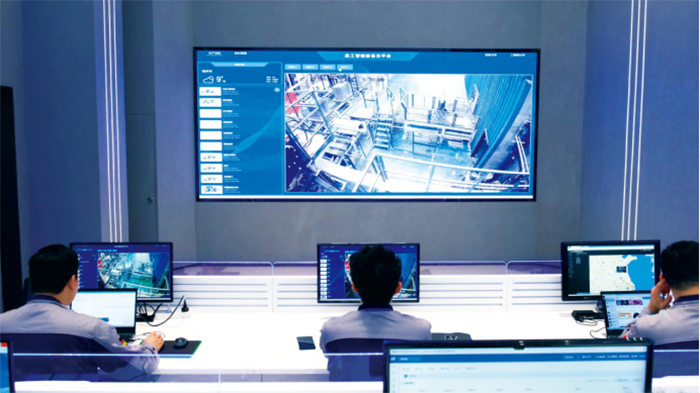
△QGM Intelligent Cloud Platform for Equipment Monitoring and Remote Service
According to QGM's data, approximately half of customer service requests could be resolved to varying degrees through the remote functions of the Intelligent Equipment Cloud Service Platform. The initiative helped improve overall after-sales service efficiency by more than 40% and reduce maintenance costs by more than 50%.
This digital service initiative also received recognition for its contribution to service-oriented manufacturing. In 2017, QGM was recognized as a representative enterprise in Fujian Province's service-oriented manufacturing development and was selected as a “Service-Oriented Manufacturing Demonstration Project” by China's Ministry of Industry and Information Technology.
The experience demonstrated that digital technology could extend the value of equipment well beyond the point of sale and create a more responsive service model throughout the equipment lifecycle.
Conclusion: Industrial Equipment Competition Is Expanding from Manufacturing Capability to Service Capability
As industrial equipment continues to expand into global markets, the competitive landscape is undergoing a fundamental shift. Mechanical performance and price are no longer the only factors that determine a customer's purchasing decision. Increasingly, customers are looking at the total value of equipment throughout its entire lifecycle—from installation and commissioning to daily operation, maintenance, and long-term technical support.
Equipment reliability, response time when issues arise, the effectiveness of remote technical support, data-driven predictive maintenance, and continuous performance optimization are becoming critical factors in determining the overall competitiveness of an equipment manufacturer.
For manufacturers, true digital transformation goes far beyond simply connecting machines to the Internet. The real objective is to turn equipment connectivity into measurable business value.
By leveraging data, manufacturers can improve equipment reliability, make service more responsive, adopt a more proactive approach to maintenance, and make production performance more predictable.
For construction machinery, building materials equipment, and industrial equipment manufacturers, this transformation provides an effective way to move beyond increasingly standardized product competition. More importantly, it represents an essential step toward building stronger long-term customer relationships and moving up the global industrial value chain.
FAQs
1. What is industrial equipment digitalization?
Industrial equipment digitalization uses technologies such as equipment connectivity, remote monitoring, data collection, and analytics to continuously track machine performance and support more efficient equipment service, maintenance, and production management.
2. How does remote monitoring improve industrial equipment maintenance?
Remote monitoring provides manufacturers with real-time or continuous equipment operating information, alarm data, and historical performance records. This allows service engineers to identify abnormal conditions earlier, support remote troubleshooting, and help customers reduce unplanned downtime.
3. Can remote diagnostics reduce downtime for block making machines?
Yes. By accessing equipment operating data, alarm information, and historical records remotely, service engineers can identify certain equipment issues without immediately traveling to the customer's site. Problems that require field service can also be assessed in advance, helping engineers prepare the necessary tools and spare parts and shorten service response times.
4. How can a block making machine benefit from preventive maintenance?
By continuously monitoring equipment operating data, manufacturers and customers can identify abnormal trends that may indicate potential component or system issues. This supports a shift from reactive maintenance to preventive maintenance, helping reduce unexpected failures, unplanned shutdowns, and production interruptions.
5. How does digital technology improve after-sales service for concrete block production equipment?
Digital service platforms can connect equipment operating data with technical, sales, and after-sales service teams. For concrete block production equipment, this can improve equipment visibility, remote troubleshooting, service response, maintenance planning, and equipment lifecycle management, ultimately supporting more reliable production and higher equipment utilization.