Full-Lifecycle Maintenance: Protecting Block Machine Quality and Production Value
For construction machinery and building materials equipment manufacturers, selling a machine is not the end of value creation. A customer's long-term return is often determined by the support provided after delivery, including spare parts supply, technical service, maintenance, equipment upgrades, and residual value management.
The development of the global construction machinery industry has demonstrated the importance of after-sales service and full-lifecycle equipment management. Take Caterpillar and Komatsu as examples. Their large installed equipment bases continue to generate value beyond new machine sales through aftermarket ecosystems covering spare parts, financing services, maintenance, and used equipment residual value management. Caterpillar's related aftermarket business reached US$27.494 billion, while Komatsu's reached US$27.120 billion. This demonstrates that for machinery manufacturers with a large installed base, long-term service capabilities are themselves an important source of business value.
The same principle applies to the block making machine industry.
Full-lifecycle maintenance for block making machines is not simply about adding several routine maintenance tasks. It is a systematic management approach covering equipment design, manufacturing, installation and commissioning, production operation, maintenance, spare parts support, technical upgrades, and residual value management throughout the machine's service life.
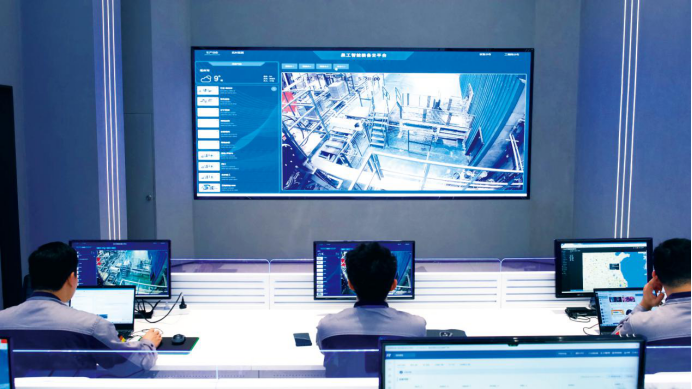
△QGM Intelligent Cloud Platform for Remote Monitoring and Lifecycle Support
The objective is to help block making machines, concrete block machines, and automated block production lines maintain stable mechanical accuracy and production performance over the long term, reduce equipment failures and unplanned downtime, extend service life, and preserve equipment value.
1. Long-Term Block Machine Reliability Starts at the Design and Manufacturing Stage
When businesses experience declining forming accuracy, unstable hydraulic pressure, or abnormal vibration after several years of operation, equipment aging is often considered the primary cause. In reality, some aspects of long-term equipment reliability are already determined during the design and manufacturing stages.
A fully automatic block making machine designed for many years of continuous operation must not only meet initial production capacity requirements. It must also be engineered for long-term vibration, continuous loading, high-dust environments, and variable raw materials.
For this reason, structural strength, hydraulic systems, wear-resistant components, and control systems should all be considered from a full-lifecycle perspective.
1.1 Reinforced Structures and Hydraulic Systems Reduce Long-Term Performance Degradation
During production, a block making machine is continuously exposed to vibration, forming pressure, and frequent mechanical movements. If the machine frame does not provide sufficient structural strength, long-term operation may result in fatigue, alignment deviations, or even structural deformation.
High-quality concrete block machines therefore require adequate strength in the machine frame, critical connections, and hydraulic system.
The hydraulic system is another important factor in long-term machine reliability. Stable hydraulic pressure affects not only the smoothness of forming movements but also green block density, dimensional accuracy, and production cycle consistency.
For equipment designed for long-term operation, appropriate hydraulic system capacity, stable pressure control, and high-quality hydraulic components can help reduce the impact of pressure fluctuations and performance degradation over time.
1.2 Wear-Resistant Design for Solid Waste Applications
As construction waste, steel slag, coal gangue, tailings, and other industrial solid wastes are increasingly used in concrete products manufacturing, block making machines for solid waste recycling are required to handle increasingly diverse raw materials.
Some solid waste materials have high hardness, inconsistent particle sizes, or strong abrasive characteristics. If equipment is designed only around conventional raw material conditions, components such as mixing systems, liners, conveying parts, and other high-contact areas may experience accelerated wear.
For solid waste recycling applications, equipment should therefore incorporate wear-resistant components and adapt batching and production processes to variations in particle size, moisture content, and material proportions. This helps reduce mechanical impact and abnormal wear at the source.
Such measures can extend the service life of critical components while improving the stability of solid waste recycling and concrete product manufacturing.
1.3 Intelligent Control Supports Long-Term Equipment Value
The competitiveness of modern automatic block production lines is no longer determined solely by mechanical design.
PLC control, automation systems, equipment condition monitoring, and remote service technologies can help manufacturers and block producers obtain equipment operating information more efficiently while reducing variations caused by manual operation.
By continuously recording equipment operating data, manufacturers can also build more complete equipment records to support future maintenance, fault analysis, component replacement, and equipment upgrades.
Over the long term, these digital capabilities not only support current production but can also contribute to extending the effective service life of the equipment.
2. Standardized Routine Maintenance Is the Foundation of Long Equipment Life
Equipment design establishes the foundation for block machine performance, while proper maintenance determines how long that performance can be sustained.
For a long-running concrete block production line, many common failures do not occur suddenly. They often develop gradually from small issues that accumulate over time.
Hydraulic oil contamination, clogged filters, insufficient lubrication, loose connections, mold wear, and aging electrical components may have little visible impact in their early stages, but can eventually affect equipment accuracy and production efficiency.
Block machine maintenance should therefore move from a reactive approach—repairing equipment only after problems occur—to a more proactive model based on regular inspection and timely maintenance.
2.1 Clean the Equipment After Production
Block manufacturing environments typically generate significant amounts of dust, aggregates, and cement residue. If these materials are not removed regularly, they can accumulate around moving components, conveying systems, and hydraulic equipment.
After production, operators should clean the equipment surface, conveying equipment, forming area, and other locations where material can accumulate.
For critical areas such as hydraulic systems and electrical cabinets, cleaning should be performed according to the equipment manufacturer's maintenance requirements to avoid secondary damage caused by inappropriate cleaning methods.
2.2 Pay Particular Attention to Hydraulic System Maintenance
The hydraulic system is one of the core operating systems of a block making machine and should receive particular attention during routine maintenance.
Hydraulic oil level, oil temperature, oil condition, and pressure changes can all provide useful indications of hydraulic system performance.
Hydraulic oil and filter replacement intervals vary depending on equipment design, operating environment, and workload. Therefore, a single universal maintenance interval should not be applied to every machine.
A more appropriate approach is to establish maintenance intervals based on the manufacturer's maintenance manual and actual operating conditions.
For machines operating continuously in high-dust or heavy-duty environments, maintenance schedules should be adjusted when necessary based on oil condition and equipment operating data.
2.3 Regularly Inspect Connections, Lubrication Points, and Electrical Systems
Because block making machines operate under continuous vibration, mechanical connections can gradually loosen. Critical bolts, connections, and structural components should therefore be inspected according to the maintenance schedule.
Lubrication points should also be serviced with the appropriate lubricant at the specified intervals. Insufficient lubrication can accelerate wear on bearings, transmission components, and other critical parts.
The electrical system should not be overlooked either. Regular inspection of sensors, control cabinets, wiring, and other electrical components can help identify potential problems early and reduce the risk of unexpected production stoppages.
3. Full-Lifecycle Service Takes Block Machine Maintenance from Repair to Long-Term Support
Relying solely on customers to maintain equipment is often insufficient to cover the entire service life of a block production system.
For a large automatic block making production line, installation and commissioning, operator training, fault diagnosis, spare parts supply, and equipment upgrades can all influence long-term equipment performance.
A mature equipment service system should therefore cover the machine throughout its entire lifecycle, from delivery through long-term operation.
3.1 Fast Response Helps Reduce Unplanned Downtime
Block manufacturing is generally a continuous production process. When a critical machine fails, the entire production line may be affected.
The value of after-sales service is therefore not simply to repair the machine, but to minimize the time between fault occurrence and production recovery.
Through remote diagnostics, equipment operating data, and professional technical support, service teams can assess problems more quickly after receiving a service request and determine whether the issue can be resolved remotely or requires an on-site visit.
This approach can reduce unnecessary field service while making maintenance more targeted and efficient.
3.2 Build a Complete Equipment Record from Installation to Long-Term Maintenance
A machine should have a complete lifecycle record from the time it leaves the factory.
This record may include the equipment model, configuration parameters, installation and commissioning records, operating data, maintenance history, spare parts replacement records, and equipment upgrade history.
When a problem occurs, engineers can use this historical information to understand the equipment more quickly instead of starting the troubleshooting process from scratch.
For older block making machines, complete equipment records become particularly valuable because they can help service personnel evaluate the current condition of the machine and determine appropriate maintenance or upgrade strategies.
4. Remanufacturing Critical Components Can Extend the Value of Older Block Machines
Not every block making machine that has been operating for many years needs to be replaced immediately.
If the main structure remains in good condition while certain critical components have experienced significant wear, professional repair, component upgrades, or remanufacturing may help restore equipment performance.
For older concrete products manufacturing equipment, professional remanufacturing of critical components can reduce the need to replace the entire machine and lower equipment upgrade costs.
Component remanufacturing is more than simply replacing parts. It involves professional inspection, repair, machining, and performance restoration to return critical components to an appropriate operating condition.
For block manufacturers seeking to extend the service life of existing equipment, this can provide a more flexible approach to equipment asset management.
5. Material Handling and Curing Systems Also Affect Long-Term Production Stability
Full-lifecycle management of a block machine should not focus only on the main molding machine.
A complete concrete block production line typically includes material feeding, conveying, palletizing, curing, and other processes. An abnormal condition in any of these stages can affect final product quality and place additional loads on the equipment.
For example, unstable green block handling during transfer can disturb the structure of freshly molded products and increase rejection rates. Similarly, inconsistent curing conditions can affect the strength and quality of finished concrete products.
Therefore, automated transfer systems, curing systems, and temperature and humidity control should also be considered important parts of full-lifecycle equipment management.
Stable green block handling and appropriate curing processes can reduce production fluctuations, helping lower rework, product rejection, and unnecessary machine operation.
6. True Full-Lifecycle Maintenance Is About Continuously Preserving Equipment Value
From equipment design and manufacturing to routine maintenance, remote service, spare parts support, and equipment upgrades, full-lifecycle management for block making machines is essentially a complete system for preserving and extending equipment value.
It is not simply about answering the question, "What should we do when the machine breaks down?"
More importantly, it addresses several long-term questions:
* How can equipment maintain stable performance over many years?
* How can unplanned downtime be reduced?
* How can the service life of critical components be extended?
* How can lifecycle maintenance costs be controlled?
* How can equipment continue generating production value after years of operation?
For a block manufacturing plant, the true value of equipment should not be measured only by its purchase price. It should also be measured by the production value generated throughout its service life.
Therefore, when selecting a block making machine, automatic block molding machine, or concrete block production line, buyers should evaluate not only production capacity, configuration, and initial investment, but also the manufacturer's after-sales service capabilities, spare parts availability, technical support, and long-term maintenance system.
Conclusion: Long-Term Block Machine Competitiveness Comes from Lifecycle Value
The scale of aftermarket business generated by companies such as Caterpillar and Komatsu demonstrates an important trend: the commercial value of construction machinery does not end when the equipment is delivered. It continues to develop throughout the machine's operating life.
The same principle applies to the block making machine industry.
A high-quality automatic block making machine needs to be designed with long-term operating requirements in mind. Once it enters production, standardized maintenance helps preserve equipment performance. When abnormalities occur, responsive service and professional diagnostics can reduce downtime. As equipment enters the later stages of its service life, component repair, remanufacturing, and technical upgrades can continue to unlock its value.
True full-lifecycle maintenance is therefore not simply about preventing equipment failure. It is about creating a complete cycle covering design, manufacturing, operation, maintenance, service, spare parts, and upgrades, allowing the equipment to maintain stable, efficient, and sustainable production performance throughout its service life.
For block manufacturers, the most important question is not simply "How long will this machine last?"It is:"How much value can this machine continue to create throughout its entire lifecycle?"
FAQ: Block Making Machine Lifecycle Maintenance
1. Why is full lifecycle maintenance important for a block making machine?
Full lifecycle maintenance helps maintain equipment performance, reduce unplanned downtime, extend the service life of key components, and preserve the long-term production value of a block making machine.
2. What should be included in a block making machine maintenance program?
A comprehensive maintenance program should cover routine cleaning and inspection, hydraulic system maintenance, lubrication, electrical system checks, spare parts replacement, equipment diagnostics, and regular technical servicing based on the manufacturer's maintenance requirements.
3. How can regular maintenance reduce downtime in a concrete block production line?
Regular inspections and preventive maintenance can identify issues such as hydraulic pressure fluctuations, component wear, loose connections, and electrical faults before they develop into major failures, helping reduce unexpected shutdowns and maintain production continuity.
4. Can an old block making machine be upgraded instead of being replaced?
Yes. If the main structure and key systems remain in good condition, professional repair, component refurbishment, remanufacturing, or technology upgrades may help restore equipment performance and extend its service life without replacing the entire machine.
5. What should buyers consider besides the price of a block making machine?
Besides purchase price, buyers should evaluate production capacity, equipment reliability, after-sales service, spare parts availability, technical support, maintenance requirements, upgrade options, and the manufacturer's ability to support the machine throughout its lifecycle.