What Happens After Buying a Concrete Block Making Machine?
Selling a machine is often treated as the end of a sales cycle.For manufacturers of construction equipment, however, the actual commercial relationship usually begins when the machine arrives at the customer's site and enters production.
Hunan, one of China's major construction machinery manufacturing bases, exported RMB 247.3 billion worth of construction machinery during the first seven months of 2026, an increase of 26.2% year over year. Exports to Belt and Road partner countries reached RMB 200.1 billion, accounting for more than 80% of the province's construction machinery exports. Official data also identifies Africa, Southeast Asia, and Latin America as important sources of incremental demand, supported by infrastructure investment and mining development.
These figures raise a question that is particularly relevant to manufacturers of concrete block machinery:
When a block making machine has been sold and installed overseas, what happens next?
That question deserves as much attention as the initial equipment sale.
Overseas Growth Is Changing What Customers Expect
The growth of overseas equipment sales does not mean that manufacturers can simply move the same machine from one market to another.
Operating environments vary considerably from region to region.
Mining customers may prioritize equipment availability because unexpected downtime can interrupt an entire production operation. Urban construction projects may place greater emphasis on noise, emissions, footprint, and operating flexibility. In hot, dusty, or humid regions, filtration, cooling, sealing, hydraulic, and electrical systems may face conditions that differ substantially from those in the manufacturer's home market.
The same principle applies to construction equipment for harsh operating conditions.
For a customer investing in a concrete block making machine for overseas markets, machine performance is only one part of the equation. Raw material characteristics, local climate, electricity supply, labor availability, production targets, product specifications, and factory conditions can all influence equipment performance.
This is why international equipment sales are increasingly moving beyond a simple "ship and install" model.
The equipment must fit the local operating environment. Spare parts need to be available. Technical personnel need to be able to reach the site when required. Operators and maintenance teams need practical training. Technical information needs to be clear enough for local teams to use during daily production.
In other words, the value of an equipment supplier is increasingly measured after commissioning, not only before the purchase order is signed.
Why Is After-Sales Service Becoming a Major Part of the Equipment Business?
The growing overseas installed base creates a second layer of demand around the original equipment.
Publicly disclosed network information from leading Chinese construction machinery manufacturers illustrates the scale of this development. One major manufacturer reports more than 300 overseas dealers, more than 2,000 service terminals, and operations covering more than 190 countries and regions. Another major manufacturer reports a sales network covering more than 180 countries and cooperation with more than 270 dealers.
These figures are significant for two reasons.
First, after-sales support is becoming an important part of the international equipment business.
Second, building a profitable service network requires much more than sending a few boxes of spare parts overseas.
A successful system requires regional inventory, trained technicians, service processes, technical documentation, diagnostic capability, communication channels, and an understanding of local equipment operating conditions.
For manufacturers of concrete block equipment, this becomes even more important because a complete production line involves multiple interconnected systems.
A production interruption may come from the block molding machine itself, but it can also originate from material feeding, batching and mixing, hydraulic systems, vibration systems, pallet handling, curing, electrical controls, or automation.
The question is therefore no longer simply:Can the supplier repair the machine?
It becomes:Can the supplier help the customer keep the production line running?
Four Business Opportunities That Can Develop After the Machine Is Sold
Once a machine has entered operation, several types of follow-up demand can emerge naturally.
For concrete product manufacturers, these opportunities are closely connected with equipment availability, production continuity, and lifecycle management.
1. Wear Parts and Frequently Replaced Components
Wear parts may not always represent the largest individual order value, but they can have a direct impact on production continuity.
Filters, seals, hoses, bearings, electrical components, vibration-related parts, hydraulic components, and other frequently replaced items need to be available when required.
This creates demand for a structured block making machine spare parts system.
For an overseas block plant, waiting several weeks for a relatively small component can be far more costly than the component itself if the production line remains idle during that period.
Regional inventory can therefore create practical value.
The key is not to stock every possible component. A more efficient approach is to identify common wear items based on equipment configuration, operating environment, production intensity, and historical service requirements.
2. Mobile Repair and On-Site Technical Service
A production plant is not always located near a major city.
Concrete block factories may be established close to aggregate sources, construction projects, industrial areas, or infrastructure developments. In some markets, transportation infrastructure can make it difficult for technicians to reach remote sites quickly.
In these situations, customers do not simply need a telephone number.
They need technicians who can arrive with the correct tools, diagnostic equipment, and replacement parts.
This is where construction equipment field service becomes important.
For a concrete block production line, effective field service should cover more than mechanical repairs. Technicians may need to understand hydraulic systems, vibration technology, electrical controls, material feeding, mold systems, automation, and production-line coordination.
The value of field service therefore depends not only on response time, but also on diagnostic accuracy and first-time repair effectiveness.
3. Operator Training and Remote Diagnostics
Modern construction equipment is becoming increasingly intelligent.
A production problem may no longer be caused only by a mechanical component. Sensors, PLCs, controllers, electrical systems, software parameters, and communication modules can all influence machine operation.
This changes the requirements for technical support.
Operators need to understand how the machine should perform under normal conditions and how to identify abnormal signals. Maintenance personnel need to distinguish between mechanical, hydraulic, electrical, and control-system issues.
That makes operator training for construction machinery an important part of international equipment delivery.
At the same time, digital technology allows manufacturers to provide support without immediately sending an engineer to the site.
Through remote diagnostics for construction equipment, technical teams can review machine information, identify potential causes, analyze operating parameters, and support local technicians during troubleshooting.
For a concrete block plant, this can be particularly useful when production interruptions involve machine settings, control systems, vibration parameters, or other issues that can be assessed remotely before an on-site visit is arranged.
Remote support does not replace field service.It makes field service more targeted.
4. Used Equipment, Remanufacturing and Financing Services
A growing installed base also creates a secondary equipment market.
As machines age, some customers may replace them, upgrade production capacity, transfer equipment to another site, or enter a different product segment.
This creates potential demand for equipment inspection, valuation, refurbishment, component replacement, warranty extensions, financing, and resale.
The development of the used construction equipment market therefore becomes a natural extension of the original equipment business.
The same principle applies to concrete block machinery.
A production line that has been properly maintained may retain useful operating value for many years. Equipment refurbishment, mold replacement, control-system upgrades, production-line expansion, and machine relocation can all create additional service requirements.
However, this business requires more than simply finding a buyer for used equipment.
Residual-value assessment, equipment condition inspection, maintenance history, technical configuration, financing risk, and local market demand all need to be considered.
What Does This Mean for a Concrete Block Making Machine?
The same lifecycle logic applies to the concrete products industry.
A concrete block making machine is not an isolated piece of equipment. In a modern plant, it normally operates as part of a larger production system that may include:
* Aggregate batching and weighing
* Concrete mixing
* Material feeding
* Block molding
* Hydraulic and vibration systems
* Mold changing
* Pallet handling
* Curing
* Cubing and stacking
* Packaging
* Electrical control
* Production monitoring
When the machine is running normally, these systems work together as one production process.
When something goes wrong, the problem may therefore involve more than the main molding machine.
For customers purchasing a fully automatic concrete block production line, the supplier's long-term support capability becomes part of the equipment investment itself.
This is particularly relevant in overseas markets where local technical resources may be limited.
A reliable service system should ideally address the complete lifecycle:Installation → Commissioning → Operator Training → Production Support → Spare Parts → Troubleshooting → Upgrades → Lifecycle Management
That is a much broader relationship than a one-time equipment transaction.
The Real Value of a Block Machine Is Created During Production
For equipment buyers, the initial purchase price is visible.
The less visible costs appear after production begins.
If a production line experiences repeated stoppages, inconsistent material feeding, prolonged troubleshooting, delayed spare-parts delivery, or insufficient operator training, the actual operating cost can be very different from the original investment calculation.
This is why manufacturers evaluating a concrete block production line should look beyond machine specifications and consider the complete operating environment.
Important questions include:
* How will the equipment be installed and commissioned?
* Who will train local operators?
* How quickly can commonly required spare parts be supplied?
* What technical support is available remotely?
* Can engineers provide on-site assistance?
* How will production problems be diagnosed?
* Can the equipment be upgraded as production requirements change?
* What support is available after the warranty period?
These questions do not replace the evaluation of machine technology.They complete it.
For overseas customers, the long-term performance of a block making machine for international markets depends on both the equipment itself and the support structure surrounding it.
QGM: Extending the Value of Block Making Equipment Beyond the Initial Sale
For a manufacturer investing in a concrete block production line for international markets, long-term technical support needs to be considered during the equipment-selection stage rather than after a problem occurs.
QGM's approach combines equipment supply with broader project and lifecycle support, covering areas such as project consultation, factory planning, raw material analysis, production-line design, equipment manufacturing, installation and commissioning, operator training, maintenance, and remote technical assistance.
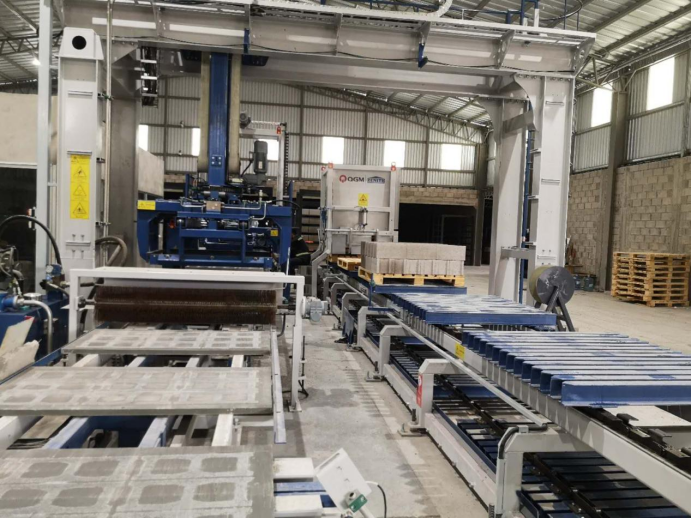
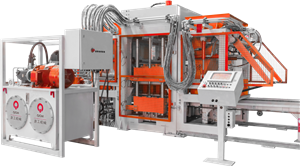
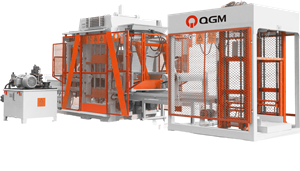
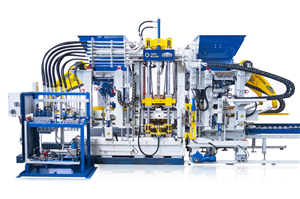
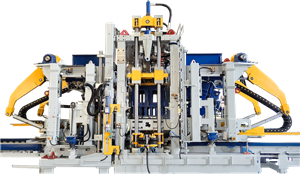
△QGM Concrete Block Making Machines Installed at Overseas Projects
This approach is particularly relevant to customers operating automatic concrete block making machines in overseas markets, where production conditions, raw materials, labor availability, and technical resources can vary significantly.
The objective is not simply to deliver a machine to a factory.
It is to help establish a production system that can be commissioned efficiently, operated correctly, maintained effectively, and supported throughout its service life.
For customers considering a new concrete block machine manufacturer, this lifecycle perspective can provide another practical dimension for comparing suppliers.
From Equipment Sales to Long-Term Production Support
The expansion of Chinese construction machinery into international markets is changing the definition of an equipment supplier.
The market data shows that overseas demand is becoming increasingly important. At the same time, the growth of the installed equipment base is creating additional demand for spare parts, field service, training, remote diagnostics, refurbishment, and other lifecycle services.
For the concrete block machinery industry, the implication is straightforward.
Selling a machine is an important milestone, but it should not be treated as the final objective.
The real test begins when the equipment enters production.
Can the machine adapt to local raw materials and operating conditions? Can operators use it correctly? Can technical problems be diagnosed efficiently? Can spare parts reach the customer when needed? Can the production line be maintained and upgraded as the customer's business develops?
These are the questions that determine how much value a concrete block making machine can create throughout its operating life.
For equipment manufacturers targeting international markets, the next stage of competition is therefore moving beyond machine sales toward production continuity and lifecycle support.
That is the more important question to consider after the block machine has been sold.
FAQ
1. Why is after-sales service important for a concrete block making machine?
A concrete block making machine operates as part of a larger production system. Installation, commissioning, operator training, spare parts, troubleshooting, and maintenance can all affect production continuity. Reliable after-sales support helps customers manage these requirements throughout the equipment lifecycle.
2. What spare parts are commonly needed for a block making machine?
The exact requirements depend on the machine configuration, operating conditions, production intensity, and maintenance practices. Commonly managed components may include wear parts, seals, hoses, bearings, hydraulic components, electrical components, and other machine-specific parts.
3. How can remote diagnostics help a concrete block production line?
Remote diagnostics can allow technical teams to review equipment information, operating parameters, alarms, and other available data before determining the appropriate troubleshooting approach. This can help identify whether an issue requires remote adjustment, local maintenance, or an on-site service visit.
4. Why is operator training important for an automatic concrete block production line?
Modern automatic production lines involve mechanical, hydraulic, electrical, control, and material-handling systems. Proper operator training helps production personnel understand normal operating conditions, recognize abnormal situations, follow maintenance procedures, and use the equipment more effectively.
5. What should buyers consider beyond the price of a concrete block making machine?
Buyers should consider machine configuration, production capacity, product range, raw materials, automation level, factory conditions, installation and commissioning, operator training, spare-parts availability, technical support, field service, remote diagnostics, and long-term upgrade requirements. These factors together provide a more complete picture of the equipment's lifecycle value.