ZENITH 940 Mobile Block Making Machine for Pallet-Free Production
When a Conventional Pallet Line Is Not the Best Fit
For many concrete-product producers, a stationary pallet-based line is an effective solution. However, it is not the only production concept. Projects involving large-format landscape units, taller concrete products, changing site conditions, or a need to reduce pallet circulation can require a different approach.
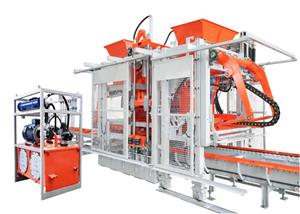
The ZENITH940 mobile laying block machine is designed around that requirement. Instead of forming every product on a production pallet and transferring it through a fixed line, the machine can place formed products directly on a prepared production floor while travelling through the working area.
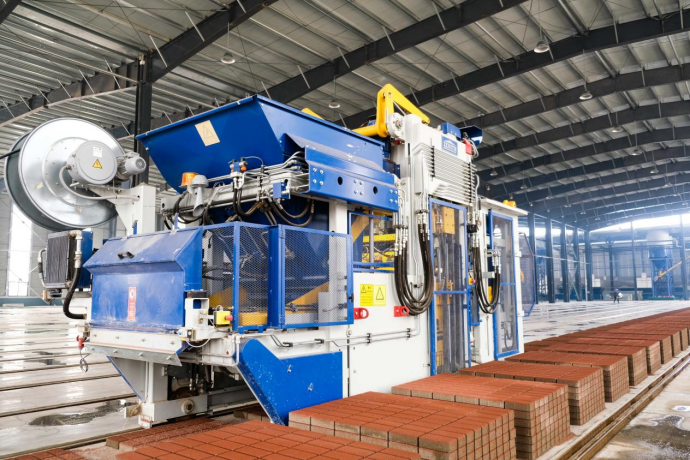
△ZENITH940 Mobile Concrete Block Machine Enables Flexible On-Site Production
This pallet-free operating principle can reduce dependence on production pallets and associated handling. It also creates a practical route for manufacturers that need a versatile concrete block making machine for varied product formats. The trade-off is clear: the production floor must be properly prepared, level, and large enough to support the machine’s travel path and product layout.
Key operating principle: the ZENITH940 is not simply a mobile version of a standard block machine. It is a mobile, multilayer production platform intended for applications where flexible product geometry and pallet-free placement offer operational value.
Where the ZENITH940 Fits Best
The ZENITH940 is suited to producers that require flexibility rather than a single, narrow product range. Depending on mould configuration and production method, it can support concrete masonry units, pavers, kerbs, retaining-wall elements, landscaping products and selected special concrete products.
Production Requirement | How the ZENITH940 Addresses It |
Reducing pallet dependence | Products can be laid directly on the production floor in applicable operating modes |
Producing taller or special-format units | Supports a broad product-height range, including high-profile landscaping applications |
Managing diverse product programmes | Stored production settings and mould-specific programmes simplify changeover management |
Operating on large prepared sites | Mobile machine layout allows production to be organized across a suitable floor area |
Improving repeatability | PLC control, proportional hydraulics and controlled vibration support stable cycle execution |
For operations producing standard low-profile units, the machine can work in pallet-based or floor-based configurations according to the selected production concept. For taller products, the mobile floor-laying mode becomes particularly valuable.
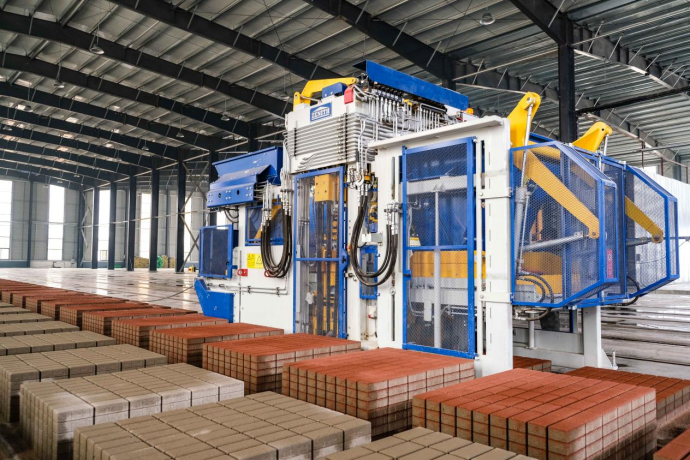
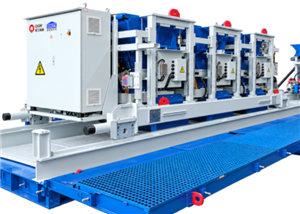
△ZENITH940 Mobile Block Making Machine for On-Site Concrete Block Production
A Mobile Production Concept That Reduces Pallet Handling
Pallets are essential in many block plants, but they also introduce recurring costs: purchase, cleaning, repair, storage, circulation and replacement. The ZENITH940 provides an alternative for suitable products by placing compacted units on the production floor as the machine advances.
Operational advantages
●Lower reliance on pallet inventory
●Fewer pallet-transfer steps in applicable workflows
●Flexible arrangement of production zones
●Potential suitability for large landscaping and civil-product formats
●A compact machine concept for projects with sufficient floor area
Important planning consideration
Pallet-free production does not eliminate the need for infrastructure. It shifts the requirement toward a well-engineered production surface. The floor must provide adequate flatness, load-bearing capacity and working area so that the machine can travel accurately and the fresh products can remain undisturbed during early curing.
Control System: Clear Operation, Repeatable Production
A machine designed for multiple products must make programme management straightforward. The QGM ZENITH940 uses a menu-guided operator interface, allowing production parameters for different moulds and product programmes to be entered, saved and recalled.
The control architecture uses a Siemens PLC for internal signal processing. In practical terms, this supports:
●Guided machine operation through the touch-panel interface
●Recipe-based parameter management for different mould sets
●Automatic production sequences
●Signal monitoring and fault indication
●Faster troubleshooting through structured diagnostic information
●Reduced dependence on manual, memory-based adjustments
For a paver block machine producing several shapes or formats, saved programmes are especially useful. They help operators return to validated settings after a mould change rather than rebuilding the process from scratch.
Hydraulic System: Controlled Motion Across the Forming Cycle
The quality of a concrete product depends not only on vibration but also on how consistently the machine moves the mould, tamper head, feed drawer and vibration table. The ZENITH940 uses a high-pressure, dual-circuit hydraulic arrangement with multi-piston pumps and proportional hydraulic control.
This configuration is intended to provide controlled movement rather than simple on/off actuation.
What proportional hydraulic control contributes | |
Hydraulic Function | Production Benefit |
Independent motion control | Different functions can operate with task-specific speed and pressure settings |
Adjustable hydraulic parameters | Operators can set relevant timing, pressure and speed values through the control interface |
Coordinated machine movements | Supports stable sequencing of feeding, mould movement, compaction and demoulding |
Controlled product placement | Helps lower products in a controlled manner during demoulding |
The ability to adjust hydraulic parameters by product type is important when switching between dense pavers, hollow blocks, kerbs or taller landscaping units. Each product requires its own balance of feed behaviour, compaction energy and movement timing.
Servo Vibration for Consistent Compaction
Compaction is the point at which a dry concrete mix becomes a usable finished product. Inconsistent vibration can cause density variation, poor edge definition, surface defects or reduced strength. The ZENITH940 vibration table is designed for staged production requirements and even transmission of vibration energy.
The upper vibration-table structure is divided to improve force distribution, while replaceable wear plates protect key surfaces. The system can be configured with different numbers of vibrators according to product height and application. Servo-driven vibration motors provide controlled vibration performance.
Technical highlights
●Vibration-table excitation force up to 80 kN
●Top-vibration force from 40 kN
●Configurable vibrator quantity for different product heights
●Support for multi-level production
●Replaceable wear protection on the vibration table
●Controlled vibration energy for product-specific compaction
For manufacturers using a concrete paver block making machine, this controlled vibration approach supports dense products with consistent geometry and surface appearance. For taller products, additional vibration configuration can be selected to suit the mould and height requirement.
Material Feeding: Uniform Filling Before Compaction
The feeding stage has a direct effect on product consistency. If concrete is not distributed evenly in the mould, vibration and pressure cannot fully correct the imbalance. The ZENITH940 uses a hydraulically driven feed drawer that travels on a high-precision rail system.
Its feeding arrangement includes a hydraulically driven swivel scraper for mould-surface cleaning and a distribution grate designed to support more even concrete placement in the mould cavity.
Feeding-system functions
●Hydraulic feed-drawer drive.
●Patented 360°rotating mixing technology; the mixing unit is equipped with a simulation-based mixing roller, which intelligently adjusts the feeding method according to different mold specifications.
●Uniform and efficient feeding.
●Optimal feeding method suitable for special materials.
●Equipped with a roller scraper to prevent aggregate residue from affecting the color of the finished product, resulting in a more aesthetically pleasing finish.
These features matter for a cement block making machine producing products with detailed face geometry, narrow webs or multiple cavities. Better filling consistency reduces the need for corrective adjustments later in the cycle.
Product Flexibility: From Standard Units to Large Landscaping Elements
One of the defining features of the ZENITH940 concept is its broad production range. The machine can be used for multi-layer production from low-profile products upward, while dedicated floor-production modes accommodate taller units.
Indicative forming capability | |
Item | Capability |
Maximum forming length | 1,240 mm |
Maximum forming width on vibration table | 1,000 mm |
Maximum forming width on ground | 1,240 mm |
Minimum product height in pallet-based multi-layer production | 50 mm |
Maximum product height in multi-layer production | 250 mm |
Maximum product height in low-level pallet production | 600 mm |
Maximum product height in low-level floor production | 650 mm |
Maximum product height in floor production | 1,000 mm |
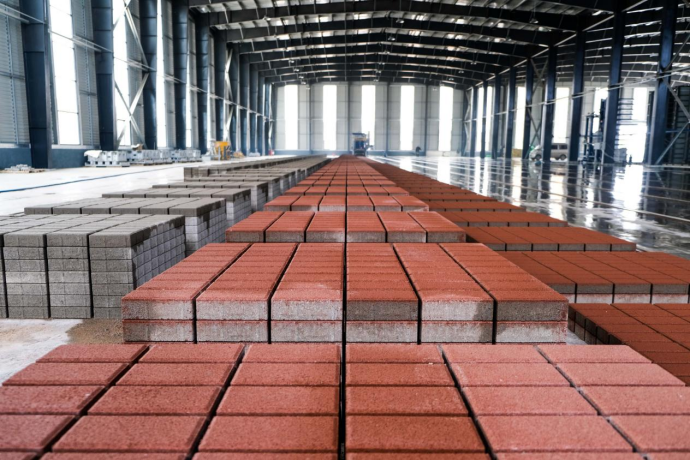
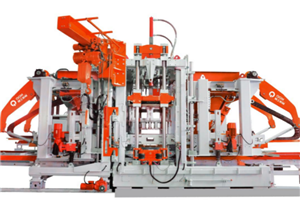
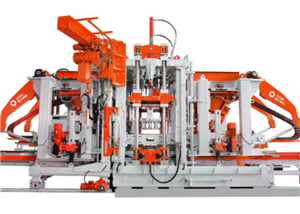
△ZENITH940 Mobile Block Making Machine in Operation for Efficient Concrete Production
This range makes the ZENITH940 a practical option for companies that do not want to limit their business to one product category. It can support a production strategy that combines routine masonry or paving products with higher-value landscape, municipal or special-format units.
Why the ZENITH940 Can Be a Strategic Choice for Growing Producers
The right machine is not always the machine with the highest nominal output. It is the machine whose production method matches the product portfolio, site conditions and commercial model of the plant.
The ZENITH940 is particularly relevant when a producer needs to balance three priorities:
1.Product diversity — the ability to serve paving, masonry, kerb and landscaping demand with one flexible platform.
2.Pallet-cost management — a floor-laying concept that can reduce pallet dependence in suitable applications.
3.Process control — programmable operation, proportional hydraulics and configurable vibration for repeatable production.
For manufacturers planning a flexible concrete block production line, the ZENITH940 can be evaluated not only as a machine purchase, but as a production-method decision.
Selection Checklist Before Choosing a Mobile Laying Block Machine
Before specifying a ZENITH940, review the following points:
☐ Is there enough level, load-bearing floor area for mobile production?
☐ Which products will be made on pallets, and which will be placed on the floor?
☐ What are the target product heights, widths and mould formats?
☐ Is the mix design suitable for the planned vibration and demoulding method?
☐ How will green products be protected and cured after placement?
☐ Does the plant require frequent mould changes or a wide product portfolio?
☐ Are operators trained to manage programme settings, hydraulic parameters and routine inspection?
A clear answer to these questions helps ensure that the mobile laying concept is applied where it delivers the strongest operational benefit.
Flexible Concrete Product Manufacturing Without a Fixed Pallet-Only Workflow
The ZENITH940 mobile laying block machine offers a distinct route for concrete-product producers that need more than conventional pallet-based manufacturing. Its mobile, multilayer concept supports pallet-free floor placement in suitable applications, while Siemens PLC control, proportional hydraulic motion, servo vibration and a precision feeding system provide the control needed for repeatable production.
For plants producing pavers, blocks, kerbs and larger landscaping products, the ZENITH940 provides a flexible platform that can adapt to changing product requirements. When supported by proper floor preparation, mould selection, mix design and curing planning, it can help manufacturers build a more versatile and cost-conscious production operation.
Partner with QGM for Advanced Block Making Solutions
QGM’s global leadership is built on continuous innovation and international collaboration. In 2014, QGM successfully acquired Zenith, a world-renowned German block machine manufacturer, becoming the first company in the industry to complete a cross-border acquisition.
Through this strategic integration, QGM combined German precision engineering, advanced pallet-free block production technology, and professional R&D expertise with its own manufacturing capabilities. The acquisition represented a significant milestone, transforming QGM into an international leader capable of competing with top global brands while promoting deeper China-Germany technology cooperation.
With over 40 years of industry experience and installations in markets worldwide, QGM remains committed to providing high-performance automatic block machines, complete production lines, and customized solutions for diverse construction requirements.
Looking for a reliable partner for your next concrete block production project? Contact QGM today and discover how our innovative block making solutions can create greater value for your business.
FAQs
1. Does the ZENITH940 always operate without pallets?
No. The machine supports different production concepts. In applicable floor-laying modes, products can be placed directly on the production surface; other modes can use pallet-based production. The suitable method depends on product dimensions, height, mould design and plant layout.
2. What products can the ZENITH940 produce?
With the appropriate moulds and production settings, the machine can be used for concrete blocks, paving units, kerbs, retaining-wall elements, landscaping products and other special concrete products within its forming range.
3. Why is a large production floor important?
In floor-laying operation, the machine travels across the production area while placing fresh products. The floor therefore needs adequate space, flatness and load-bearing capacity to support machine movement and early-stage product handling.
4. How does servo vibration improve product quality?
Servo vibration enables controlled compaction energy for different products. Correct vibration settings help improve density, edge definition and consistency while reducing the risk of under-compaction or unnecessary over-vibration.
5. Can the machine store settings for different moulds?
Yes. The menu-guided touch-panel system allows production parameters and programmes for different mould types to be entered and stored, helping operators manage repeat production more consistently.
6. Is the ZENITH940 suitable for tall landscaping products?
Yes. Depending on the selected production mode, the machine supports product heights from 50 mm up to 1,000 mm, making it suitable for a broad range of landscaping and special concrete products.