CO₂ Curing Chamber for Concrete Products

- QGM
- China
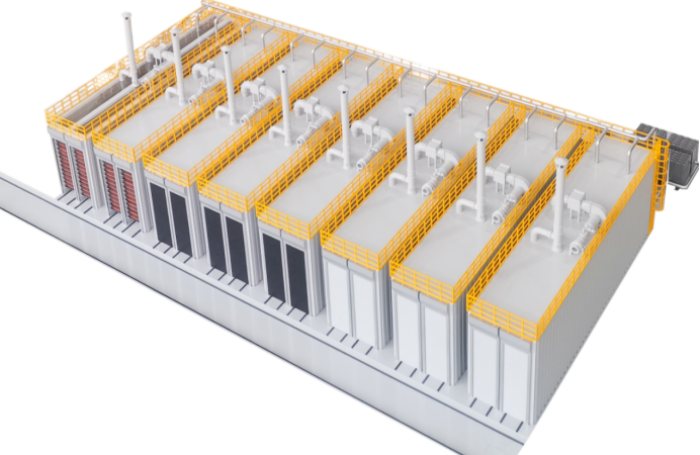
QGM CO₂ Curing Chamber features multi-layer sealing, variable-frequency gas circulation, electric heating, and PLC control for controlled carbonation curing of concrete blocks and precast products.
Ⅰ.CO₂ Curing Chamber Overview
Concrete curing is no longer limited to temperature and humidity management. With the development of mineral carbonation technology, concrete manufacturers can also explore the use of carbon dioxide as part of the curing process.
The QGM CO₂ Curing Chamber is an enclosed system designed to support controlled carbonation curing of concrete blocks, paving products, and other compatible concrete products. By introducing CO₂ into a managed curing environment, the system allows carbon dioxide to react with suitable components in concrete and form stable carbonate compounds.
Unlike a conventional concrete curing chamber, which mainly manages temperature and humidity, the CO₂ curing chamber for concrete products also controls CO₂ concentration and chamber pressure. These parameters work alongside temperature, relative humidity, and curing time to establish the required carbonation conditions.
The equipment combines a sealed multi-layer chamber, variable-frequency gas circulation, electric heating, internal ductwork, PLC-based process control, exhaust components, and dedicated safety protection. Each subsystem serves a specific role in managing the carbonation curing process.
During mineral carbonation, part of the introduced CO₂ may react with suitable concrete components and remain in the material as stable carbonate compounds. The reaction products can contribute to changes in the internal concrete structure and hardening behavior. Actual CO₂ uptake and product performance depend on the concrete formulation and curing conditions.
For manufacturers exploring carbon utilization in concrete production, the QGM CO₂ carbonation curing chamber provides an integrated equipment solution for evaluating and implementing suitable carbonation processes.
Ⅱ. How the CO₂ Curing Chamber Works
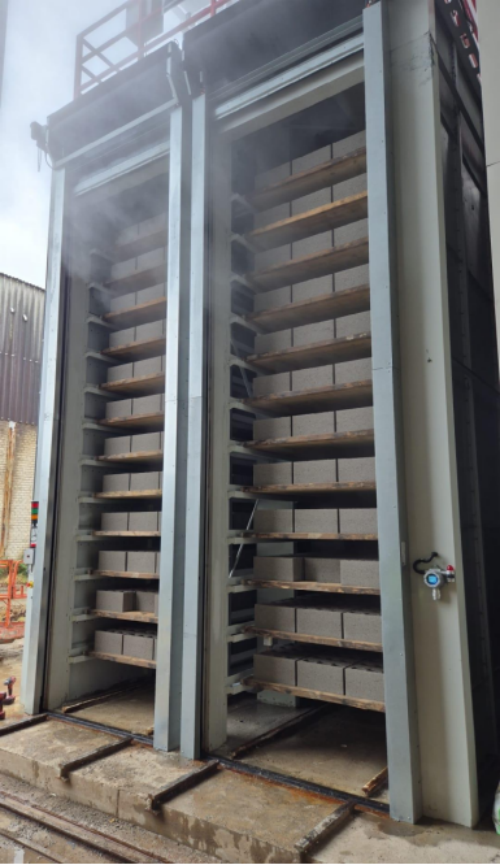
The carbonation curing process involves several coordinated stages. The chamber enclosure, gas circulation, heating, process control, and exhaust equipment work together to manage the environment throughout the curing cycle.
1. Enclosed Chamber Preparation
The multi-layer chamber structure provides an enclosed space for carbonation curing.
The chamber consists of:
•An outer protective layer
•An insulation layer
•An inner ventilation wall
The outer layer provides structural protection, the insulation layer helps reduce heat loss, and the inner ventilation wall supports airflow distribution within the chamber.
The enclosed construction is designed to accommodate the humid, CO₂-rich environment associated with carbonation curing while providing a suitable space for process management.
2. CO₂ Circulation and Temperature Management
Once the curing process begins, gas movement and temperature distribution become important considerations.
The QGM CO₂ curing system integrates a variable-frequency radial circulation fan, electric heaters, and internal ductwork to manage the movement of gas and heated air.
The circulation fan drives airflow through the chamber, while variable-frequency speed control allows airflow to be adjusted according to process requirements.
Electric heaters provide the heat required during curing. The internal ductwork connects the circulation equipment with the chamber interior, helping distribute CO₂ and heated air throughout the enclosed space.
This coordinated arrangement supports the management of internal curing conditions during carbonation.
3. PLC-Based Parameter Management
Different concrete formulations and product specifications may require different curing programs. Managing the main process variables is therefore essential for controlled carbonation.
The PLC-based control system monitors and regulates five key parameters:
Controlled Parameter | Role in the Curing Process |
CO₂ concentration | Manages the carbon dioxide level in the chamber |
Temperature | Controls the thermal conditions during curing |
Relative humidity | Regulates the moisture conditions inside the chamber |
Chamber pressure | Monitors and manages internal pressure conditions |
Curing time | Controls the duration of the programmed curing cycle |
The system operates according to preset curing programs and records process information for subsequent production analysis.
For concrete manufacturers, centralized PLC control provides a structured way to manage the different variables involved in carbonation curing and review process information after each cycle.
4. Exhaust and Residual CO₂ Management
Gas management continues after the carbonation stage. Residual carbon dioxide needs to be handled before the chamber is accessed.
The QGM CO₂ Curing Chamber incorporates an exhaust and louver valve assembly to manage gas discharge during the relevant process stages.
A fresh-air replacement module introduces external air into the chamber after carbonation curing, helping displace residual CO₂ and reduce its remaining concentration before chamber access.
This arrangement connects the curing stage with the subsequent exhaust and chamber-access procedure.
Ⅲ.Key Features of CO₂ Curing Chamber
1. Multi-Layer Chamber Construction for Carbonation Conditions
The chamber structure plays an important role in maintaining an enclosed curing environment.
The QGM CO₂ Curing Chamber combines external protection, thermal insulation, and an inner ventilation wall in a multi-layer construction. The arrangement is designed for the humid and CO₂-rich conditions associated with carbonation curing.
For manufacturers comparing a sealed CO2 curing chamber, the chamber enclosure should be evaluated together with the gas circulation and environmental control systems rather than as an isolated structural component.
2.Variable-Frequency Gas Circulation
Airflow inside the chamber affects how CO₂ and heated air move through the curing space.
The radial circulation fan uses variable-frequency speed control, allowing the airflow to be adjusted according to the selected curing process. Internal ductwork guides gas movement and connects the circulation equipment with the chamber interior.
The circulation arrangement forms an important part of the CO2 carbonation curing system, supporting coordinated gas and temperature management.
3. Integrated Electric Heating
The electric heating system supplies heat during the carbonation curing process.
Working together with the circulation fan and internal ductwork, the heaters support the distribution of heated air inside the chamber. The heating system is coordinated with the PLC-based process control to manage the selected curing conditions.
4.Centralized PLC Control and Process Records
The PLC-based control system brings the main curing parameters together in one control arrangement.
CO₂ concentration, temperature, relative humidity, chamber pressure, and curing time are monitored and regulated according to preset programs. Process information is also recorded for subsequent analysis.
This configuration is relevant to manufacturers who need to evaluate different concrete formulations and curing programs during production development.
5.Independent Safety Protection
An enclosed chamber containing carbon dioxide requires dedicated protection against leakage and abnormal pressure conditions.
The QGM CO₂ curing chamber system incorporates the following safety components:
CO₂ Leakage Detection
Monitors the surrounding environment for potential carbon dioxide leakage and supports timely safety responses.
Overpressure Safety Valve
Provides protection against abnormal positive pressure inside the chamber.
Negative-Pressure Safety Valve
Helps protect the chamber against abnormal negative pressure conditions.
Independent Safety Control System
Provides dedicated safety functions alongside the main process control system.
These components address gas leakage and pressure-related risks as part of the overall chamber design.
6.Coordinated System Configuration
A carbonation curing chamber requires more than a sealed enclosure or a CO₂ supply connection. The different systems need to work together throughout the curing cycle.
The QGM equipment integrates chamber construction, gas circulation, electric heating, environmental monitoring, exhaust management, and safety protection.
For manufacturers planning a concrete CO₂ curing system, this coordinated configuration provides an integrated approach to managing the carbonation process and connecting the curing equipment with existing concrete production operations.
Ⅳ.Applications of the CO2 Curing Chamber
The QGM CO₂ Curing Chamber is designed for concrete products whose material compositions are suitable for carbonation curing. Potential applications include:
1. Concrete Masonry Blocks
Concrete blocks used in building construction can be evaluated for CO₂ carbonation curing when their material composition and product requirements are compatible with the process.
2. Concrete Paving Blocks
Suitable concrete paving blocks used in roads, pedestrian areas, and outdoor paving projects can be considered for controlled carbonation curing.
3. Precast Concrete Products
Compatible precast concrete units can be treated under controlled carbonation conditions, with the curing program determined according to product characteristics and required performance.
4. Low-Carbon Building Materials
Mineral carbonation allows a portion of introduced CO₂ to react with suitable concrete components and form stable carbonate compounds. This provides manufacturers with an approach to exploring CO₂ utilization in concrete product manufacturing.
The suitability of each application depends on concrete composition, raw material characteristics, product dimensions, initial material conditions, and required final performance. Mix design evaluation and product testing are recommended before regular production use.
QGM CO₂ Curing Solutions for Concrete Manufacturers
QGM provides concrete product manufacturing equipment and carbonation curing solutions for manufacturers exploring CO₂ utilization in building material production.
The QGM CO₂ Curing Chamber combines an enclosed multi-layer structure, variable-frequency gas circulation, electric heating, PLC-based process management, exhaust equipment, and dedicated safety protection.
The system is designed to support controlled carbonation curing for compatible concrete blocks, paving products, and precast concrete units.
For manufacturers evaluating a new carbonation process or introducing CO₂ curing into an existing concrete production facility, equipment selection should begin with the actual material composition, product specifications, and process requirements.
Planning to introduce CO₂ carbonation curing into your concrete production line?
Contact QGM with your concrete mix information, product dimensions, CO₂ supply conditions, and required product performance. The QGM team can help assess your application and discuss a suitable CO2 curing chamber for concrete products.
Frequently Asked Questions About CO₂ Curing Chambers
1. Can a CO2 curing chamber be used for both concrete blocks and paving blocks?
Yes. The QGM CO2 Curing Chamber is designed for concrete blocks, paving products, and other concrete products whose material compositions are suitable for carbonation curing. The actual application should be confirmed through mix design evaluation and product testing.
2. Why does the chamber use a variable-frequency circulation fan?
The variable-frequency radial fan drives gas movement inside the chamber. Adjustable fan speed allows airflow to be configured according to the requirements of the carbonation curing process, while the internal ductwork guides gas distribution.
3. What process information does the PLC system record?
The PLC-based system monitors and regulates CO₂ concentration, temperature, relative humidity, chamber pressure, and curing time according to preset curing programs. Process information is recorded for subsequent production analysis.
4. What happens if abnormal pressure develops inside the curing chamber?
The equipment incorporates both overpressure and negative-pressure safety valves to provide protection against abnormal chamber pressure conditions. An independent safety control system provides additional dedicated protection functions alongside the main process control system.
5. How can manufacturers verify the amount of CO₂ retained in concrete?
CO₂ retention depends on concrete composition and curing conditions. Manufacturers need to evaluate the actual carbonation results through appropriate material testing rather than assuming that all CO₂ introduced into the chamber is retained. Test results can provide a basis for assessing CO₂ uptake under specific production conditions.