Concrete Block Calibration and Grinding System for Precast Concrete Finishing

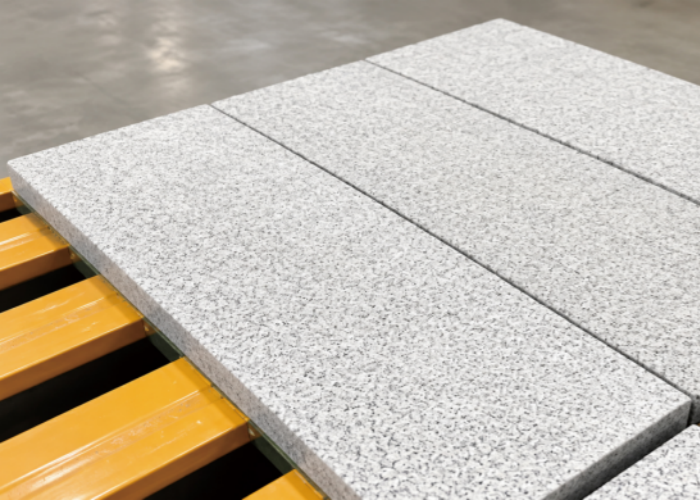
- QGM
- China
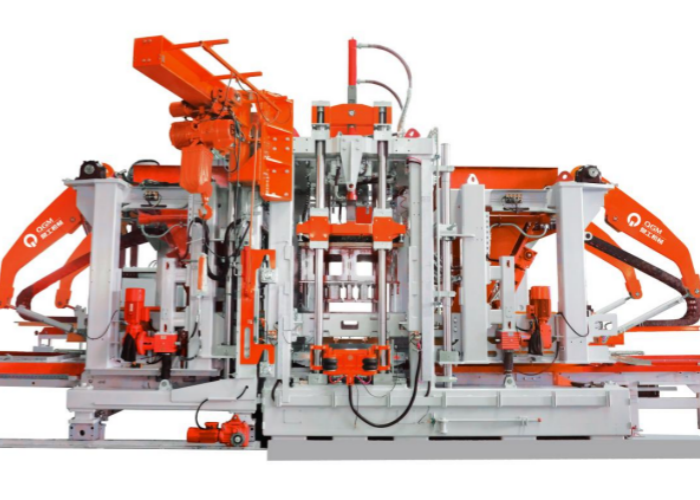
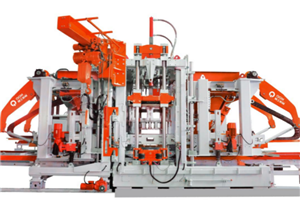
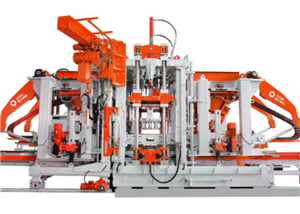
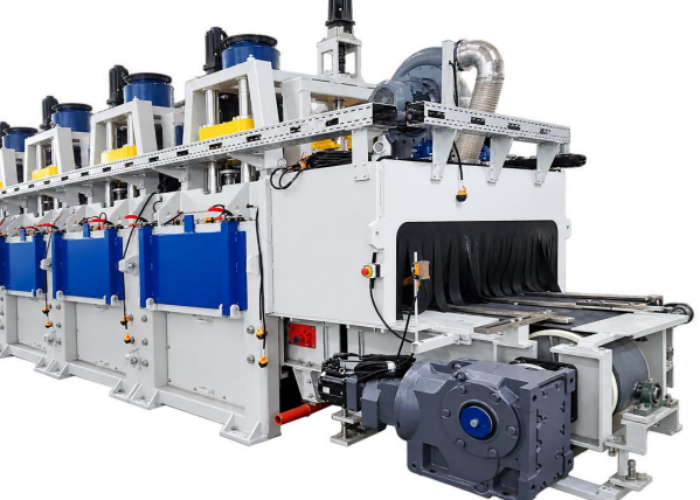
QGM's Concrete Block Calibration and Grinding Machine integrates dual-head thickness calibration, automatic 180° turning, multi-stage grinding, and optional polishing to improve thickness consistency and surface flatness of precast concrete products.
Ⅰ.Product Overview
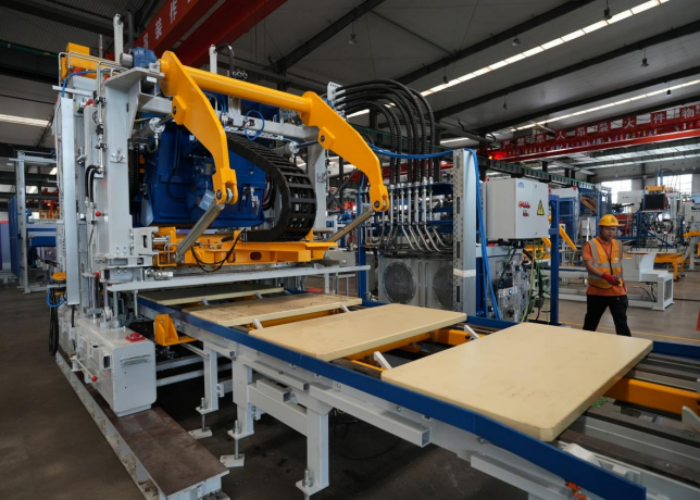
The QGM Concrete Block Calibration and Grinding System is designed for dimensional calibration and surface finishing of precast concrete products. By combining thickness correction, automatic product turning, multi-stage grinding, and optional polishing, the system provides an integrated solution for processing concrete components that require controlled thickness and improved surface flatness.
The process begins with back-surface calibration. The machine removes excess material to bring the product closer to its required thickness, then refines the calibrated surface to reduce rough pressing marks and waviness. After this stage, an automatic turning device rotates the product 180° so that the opposite surface can undergo grinding.
Front-surface finishing is carried out through multiple grinding stations, progressing from rough grinding to finer surface treatment. An optional polishing stage can be incorporated when the application calls for a more refined finish.
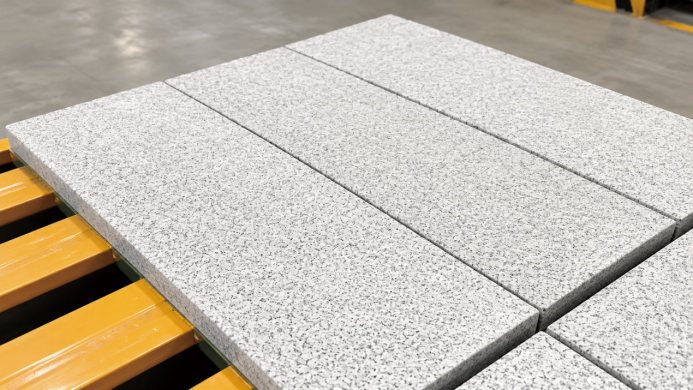
The machine is suitable for concrete curbstones, paving stones, paving slabs, and other compatible precast concrete products.
For manufacturers processing concrete products with different finishing requirements, this integrated arrangement brings several surface-treatment operations into a coordinated workflow.
Ⅱ.Key Advantages
1. Dual-Head Calibration for Controlled Thickness
Thickness calibration is performed by two heads with different processing functions.
The first head removes excess material from the back surface to correct thickness variation. The second head further smooths the calibrated surface, helping reduce irregularities associated with the initial pressing process.
This two-stage arrangement combines material removal with surface refinement. It is intended to improve thickness consistency while preparing the product for the subsequent finishing stages.
Key functions:
•Removes excess material from the back surface.
•Helps reduce rough pressing marks and surface waviness.
•Combines initial calibration and subsequent surface refinement in one processing sequence.
2.Large-Diameter Grinding Discs for Surface Flatness
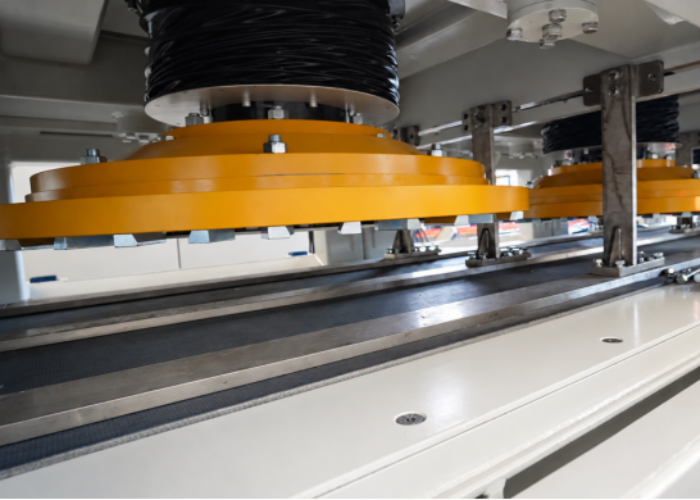
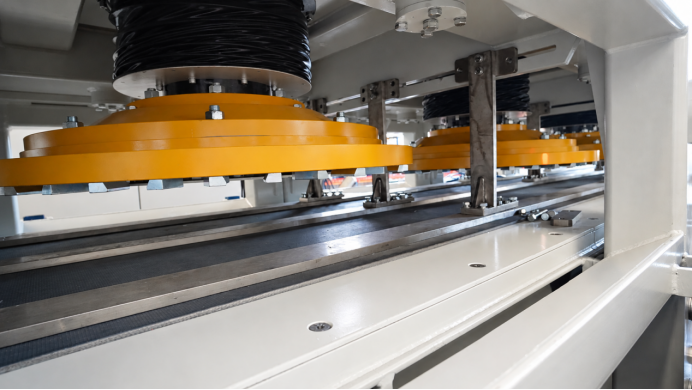
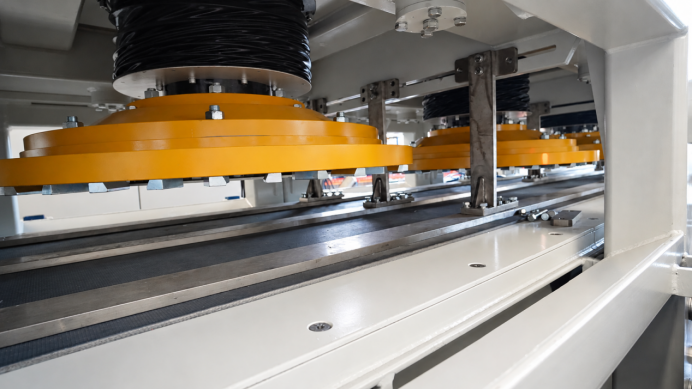
Large-diameter grinding discs process the concrete surface across the machine's working width. Their configuration helps minimize wave-like surface defects and supports a flatter finish.
For precast concrete products, surface flatness is an important aspect of finishing quality. The grinding arrangement is designed to address unevenness across the processed area rather than relying on isolated surface correction.
When evaluating a concrete surface grinding machine, manufacturers should also consider the dimensions of the product, the required finish, and the compatibility between the grinding process and the concrete material.
3. Automatic 180-Degree Turning Between Processing Stages
Once back-surface calibration is complete, the automatic turning device rotates the product by 180°. This positions the opposite surface for the subsequent grinding operation.
By incorporating product turning into the machine's processing sequence, calibration and front-surface grinding can be connected without treating them as entirely separate finishing operations.
This arrangement is particularly relevant to production workflows in which both thickness correction and front-surface treatment are required.
4. Multi-Stage Grinding and Optional Polishing
The front-surface finishing process uses multiple grinding stations. Processing progresses from rough grinding toward finer grinding, allowing the surface to be refined in stages.
For applications requiring a more refined appearance, an optional polishing stage can be added to the finishing process.
The combination of staged grinding and optional polishing allows the finishing sequence to be selected according to the intended application and surface-quality requirements.
Available finishing functions:
•Rough grinding.
•Fine grinding through multiple processing stages.
•Optional polishing for applications requiring additional surface refinement.
5. Contact-Pressure Control and HMI Operation
The machine incorporates contact-pressure control and a human-machine interface (HMI) for managing processing operations. Recipe management allows operating settings to be organized for different finishing requirements.
These functions support structured process adjustment when working with different product specifications.
The machine also supports dry and wet processing modes, allowing the grinding method to be selected according to the intended application and process requirements.
Before production, the appropriate process settings and processing mode should be evaluated against the product material, dimensions, and required surface finish.
Ⅲ.Typical Applications
The QGM Concrete Block Calibration and Grinding System can be used for finishing compatible precast concrete products, including:
•Concrete Curbstones: Back-surface thickness calibration and surface grinding.
•Concrete Paving Stones: Multi-stage grinding and optional polishing.
•Concrete Paving Slabs: Thickness correction and surface-flatness improvement.
•Other Precast Concrete Products: Calibration and surface treatment where the product dimensions and processing requirements are compatible with the machine.
An Integrated Approach to Concrete Surface Finishing
The QGM system brings together several operations required in concrete product finishing: back-surface calibration, automatic turning, multi-stage front-surface grinding, and optional polishing.
Its dual-head calibration arrangement addresses thickness variation, while large-diameter grinding discs help minimize wave-like surface defects. The automatic turning device connects the calibration and grinding stages, and the HMI, recipe management, contact-pressure control, and selectable dry or wet processing modes support different finishing requirements.
To identify a suitable configuration, manufacturers can provide QGM with their product drawings, dimensions, target thickness, surface-finish requirements, and preferred processing method for technical evaluation.